In the evolving landscape of higher education finance, significant shifts are on the horizon. For over 40 million Americans grappling with educational debt, understanding the upcoming Student Loan Changes 2026 is not just beneficial, it’s essential for financial stability and future planning. These federal updates promise to reshape repayment strategies, introduce new mechanisms for relief, and potentially alter the trajectory of millions of borrowers’ financial lives. This comprehensive guide aims to demystify these changes, offering clear insights and actionable advice to help you navigate the complexities and optimize your repayment journey.
Anúncios
The federal government periodically reviews and revises its student loan policies to address economic shifts, borrower needs, and the overall effectiveness of the system. The changes slated for 2026 are particularly noteworthy, building upon recent reforms and aiming to provide more sustainable and equitable repayment paths. Whether you are a recent graduate, a mid-career professional, or nearing retirement with outstanding student debt, these updates will likely impact you. Ignoring them could lead to missed opportunities for savings, increased stress, and potentially prolonged repayment periods. Therefore, proactive engagement and informed decision-making is paramount.
The Genesis of Change: Why Are Federal Policies Evolving?
The impetus behind the Student Loan Changes 2026 stems from a multifaceted analysis of the current student loan system. For years, policymakers and economists have raised concerns about the escalating cost of higher education, the growing burden of student debt, and the efficacy of existing repayment programs. The COVID-19 pandemic further highlighted vulnerabilities in the system, prompting unprecedented pauses in payments and interest accrual. These events underscored the need for more robust, flexible, and borrower-friendly frameworks.
Key factors driving these legislative and administrative adjustments include:
Anúncios
- Rising Debt Burden: The cumulative student loan debt in the U.S. has surpassed $1.7 trillion, affecting a significant portion of the adult population. This debt can hinder economic mobility, delay major life milestones like homeownership, and contribute to broader economic instability.
- Complexity of Repayment Options: The existing array of income-driven repayment (IDR) plans, deferments, and forbearance options has often been criticized for its complexity, leading to confusion and underutilization by eligible borrowers.
- Equity and Access Concerns: Disparities in educational attainment and financial outcomes often correlate with socioeconomic status and race. New policies aim to address these inequities by making repayment more accessible and affordable for all borrowers, particularly those from disadvantaged backgrounds.
- Economic Volatility: Recent economic downturns and inflationary pressures have demonstrated the need for repayment systems that can adapt to individual financial hardship and broader economic fluctuations.
The 2026 updates are, in many ways, a culmination of these observations and a strategic effort to create a more resilient and fair student loan ecosystem. They represent a commitment to ensuring that higher education remains an accessible pathway to opportunity, rather than a lifelong financial burden.
Decoding the SAVE Plan: A Cornerstone of the 2026 Updates
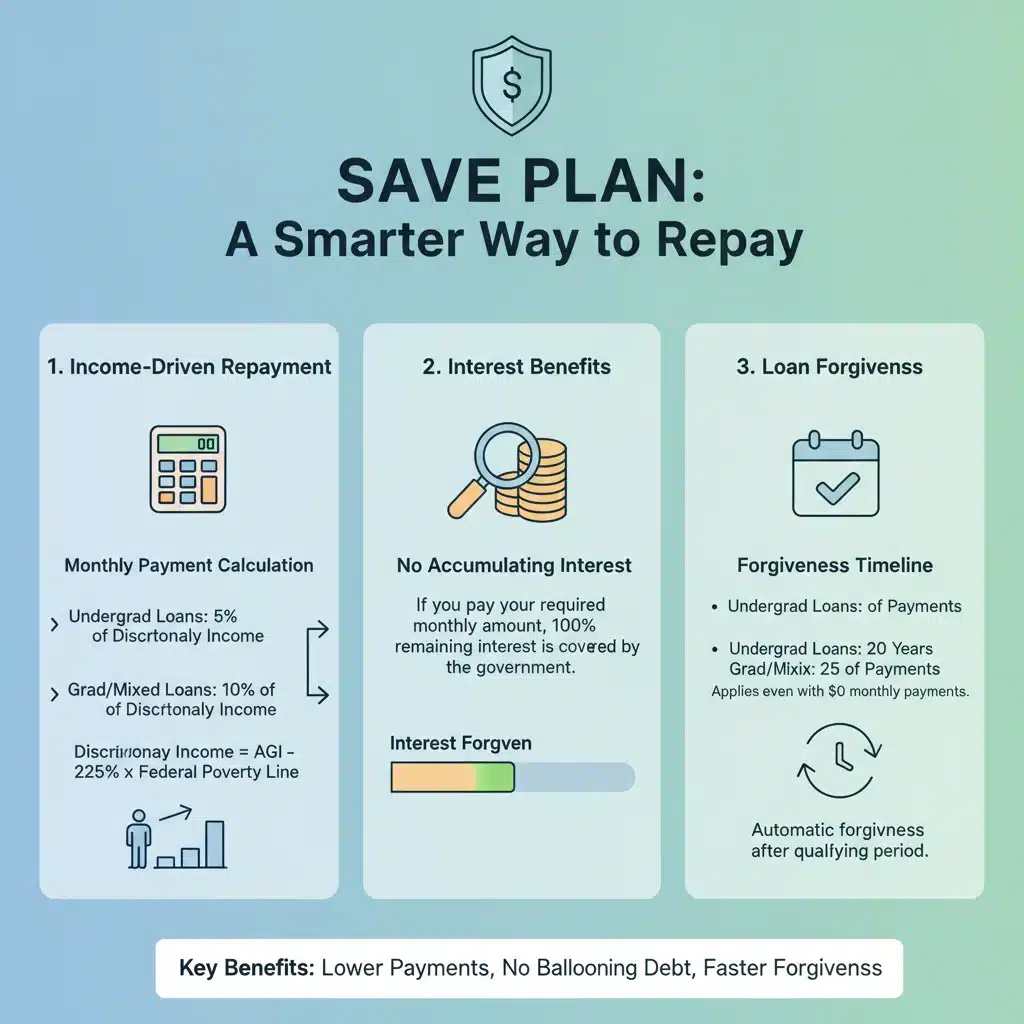
One of the most significant aspects of the upcoming Student Loan Changes 2026 is the full implementation and refinement of the Saving on a Valuable Education (SAVE) Plan. Launched as a successor to the REPAYE Plan, the SAVE Plan is designed to be the most affordable income-driven repayment option ever offered by the federal government. Its principles are centered on reducing monthly payments, preventing interest capitalization, and offering a faster path to loan forgiveness.
While some features of the SAVE Plan are already in effect, 2026 will see the full rollout of its most impactful provisions. Here’s a detailed look at what borrowers can expect:
- Lower Monthly Payments: Under the SAVE Plan, discretionary income is calculated differently, increasing the amount of income protected from repayment. For undergraduate loans, monthly payments will be reduced from 10% to 5% of discretionary income. This means many borrowers will see their monthly payments significantly decrease, with some even qualifying for a $0 payment.
- Interest Subsidies: A groundbreaking feature of the SAVE Plan is that if your monthly payment doesn’t cover the accruing interest, the government will cover the remaining interest. This prevents your loan balance from growing due to unpaid interest, a common frustration under previous IDR plans. This is a game-changer for borrowers struggling to make ends meet, as it means their principal balance won’t balloon, even if they’re making minimal payments.
- Faster Loan Forgiveness: For borrowers with original loan balances of $12,000 or less, the SAVE Plan offers loan forgiveness after just 10 years of payments. This is a substantial reduction from the 20- or 25-year forgiveness timelines of other IDR plans and is particularly beneficial for those with smaller loan amounts.
- Spousal Income Exclusion: Unlike some previous IDR plans, the SAVE Plan excludes spousal income for married borrowers who file separately, making it more favorable for individuals whose spouse has significant income.
- Automatic Enrollment Simplification: Efforts are underway to streamline the process for enrolling and recertifying in IDR plans, potentially leading to more automatic enrollments for eligible borrowers and reducing administrative hurdles.
Understanding these facets of the SAVE Plan is critical. It represents a fundamental shift in how federal student loans are repaid, prioritizing affordability and preventing the perpetual growth of debt for struggling borrowers. Borrowers should actively investigate if the SAVE Plan is the right choice for their specific financial situation.
Other Key Federal Updates and Their Implications
Beyond the SAVE Plan, the Student Loan Changes 2026 encompass several other vital federal updates that will influence repayment strategies for millions. These changes aim to create a more cohesive and supportive ecosystem for borrowers.
1. Enhanced Public Service Loan Forgiveness (PSLF) Program
While PSLF has been around for some time, ongoing efforts to simplify and expand eligibility continue. The 2026 period may see further refinements to ensure that public servants who dedicate their careers to community service receive the forgiveness they were promised. This includes clearer guidelines for eligible employment, streamlined application processes, and potentially expanded definitions of qualifying payments. Borrowers working for government agencies or eligible non-profits should pay close attention to these updates, as they could significantly accelerate their path to loan discharge.
2. Streamlined Income-Driven Repayment (IDR) Recertification
One of the biggest pain points for borrowers in IDR plans has been the annual recertification process, which often involves submitting income and family size documentation. Failure to recertify on time can lead to payment spikes and interest capitalization. The Student Loan Changes 2026 are expected to bring more automated data-sharing agreements with the IRS, making it easier for borrowers to remain enrolled and prevent administrative errors. This simplification is a welcome relief for millions, reducing the burden of paperwork and ensuring continuous access to affordable payments.
3. Addressing Default and Delinquency
The federal government is also focusing on improving outcomes for borrowers who fall into default or delinquency. New initiatives may include more flexible rehabilitation programs, expanded opportunities to transition into IDR plans from default, and a greater emphasis on proactive outreach to struggling borrowers. The goal is to move away from punitive measures and towards supportive pathways that help borrowers regain financial footing and avoid the severe consequences of default, such as wage garnishment and tax refund offsets.
4. Impact on Parent PLUS Loans
Parent PLUS loans, often a significant source of educational debt for families, are also under scrutiny. While the SAVE Plan primarily targets direct loans for students, discussions around how to make Parent PLUS loans more affordable or provide better repayment options for parents are ongoing. While direct changes to Parent PLUS loans within the SAVE framework are not currently slated for 2026, the overall push for affordability may indirectly influence future policy debates or lead to separate initiatives for these borrowers.
These federal updates collectively aim to create a more humane and effective student loan system. By understanding each component, borrowers can strategically position themselves to benefit from the new policies.
Strategic Repayment Options: Maximizing the 2026 Changes
With the Student Loan Changes 2026 on the horizon, now is the opportune time to re-evaluate your current repayment strategy and make adjustments. Here are key strategies to consider:
1. Reassess Your Eligibility for the SAVE Plan
If you are currently on a different IDR plan (PAYE, IBR, ICR) or a standard repayment plan, it is crucial to compare your current situation with the benefits of the SAVE Plan. For many, the SAVE Plan will offer lower monthly payments and prevent interest growth, potentially saving thousands over the life of the loan. Use the Federal Student Aid website’s Loan Simulator tool to see how your payments would change under SAVE.
2. Consolidate Your Federal Loans (If Applicable)
Direct Loan Consolidation can be beneficial for several reasons, especially in light of the 2026 changes. It can make older federal loans eligible for IDR plans like SAVE and for PSLF. If you have FFEL Program loans, Perkins Loans, or other older federal loan types, consolidating them into a Direct Consolidation Loan is often a necessary step to access the most favorable federal benefits. Be mindful that consolidation can sometimes reset your payment count for forgiveness programs, so weigh the pros and cons carefully, especially if you are close to PSLF or IDR forgiveness.
3. Explore Public Service Loan Forgiveness (PSLF)
If you work for a qualifying employer, ensure you are on track for PSLF. The 2026 updates and ongoing flexibilities make PSLF more accessible than ever. Make sure your employment is certified annually, and that you are making qualifying payments under an eligible IDR plan (like SAVE). The PSLF Help Tool on the Federal Student Aid website is an invaluable resource for this.
4. Consider Income Recertification Timing
For those on IDR plans, the timing of your annual income recertification can be strategic. If your income has decreased, recertifying earlier could lead to lower payments. Conversely, if your income has recently increased significantly, waiting until your scheduled recertification date might allow you to make more payments at a lower rate. With streamlined recertification coming, this might become less of a manual process, but being aware of your income changes is still important.
5. Understand the Impact on Your Credit Score
While student loan payments are reported to credit bureaus, the 2026 changes are primarily designed to make repayment more manageable, which can positively impact your financial health. Lower, more affordable payments reduce the likelihood of delinquency or default, which are detrimental to credit scores. Staying current on your payments, even if they are $0 under SAVE, is key to maintaining good credit.
6. Stay Informed and Proactive
The most important strategy is to remain informed. The Department of Education and your loan servicer are the primary sources of accurate information. Regularly check the Federal Student Aid website (studentaid.gov) for updates, sign up for email notifications, and review any correspondence from your loan servicer. Proactive engagement will ensure you don’t miss out on benefits or fall behind on new requirements.
The Broader Impact on 40 Million Borrowers
The Student Loan Changes 2026 are poised to have a profound and widespread impact on the financial well-being of approximately 40 million borrowers. This isn’t just about tweaking a few rules; it’s about fundamentally altering the relationship between borrowers and their educational debt.
- Increased Financial Flexibility: Lower monthly payments, especially for those with lower incomes, will free up significant portions of household budgets. This newfound flexibility can be directed towards other financial goals, such as saving for a down payment, building an emergency fund, or investing for retirement.
- Reduced Stress and Mental Health Benefits: The burden of student loan debt is a major source of stress for millions. Policies that prevent balances from growing and offer clearer paths to forgiveness can significantly alleviate this mental load, contributing to improved overall well-being.
- Economic Stimulus: When borrowers have more disposable income, they are more likely to spend it, stimulating local and national economies. This could lead to increased consumer spending, business growth, and job creation.
- Improved Equity: By making repayment more affordable and accessible, particularly through the SAVE Plan, these changes are expected to disproportionately benefit low-income borrowers and those from marginalized communities who often struggle the most with student debt. This contributes to greater economic equity and reduces wealth disparities.
- Greater Access to Higher Education: A more manageable student loan system can reduce anxieties about taking on debt for education, potentially encouraging more individuals to pursue higher education, knowing that the financial burden will be more sustainable.
However, it’s also important to acknowledge that these changes require borrowers to be engaged. Those who remain unaware or fail to take action may not fully realize the benefits. The onus is on individual borrowers to understand their options and make informed decisions.
Common Misconceptions and Clarifications
Amidst significant policy changes, misinformation can proliferate. Let’s clarify some common misconceptions regarding the Student Loan Changes 2026:
- Myth: All student loans will be forgiven in 2026.
Reality: While the SAVE Plan offers faster forgiveness for certain low-balance loans (10 years for $12,000 or less) and other IDR plans offer forgiveness after 20-25 years, blanket forgiveness for all federal student loans is not part of the 2026 updates. Forgiveness is conditional and requires meeting specific criteria. - Myth: I have to apply for forgiveness.
Reality: Forgiveness under IDR plans (including SAVE) and PSLF generally requires an application process. While some administrative streamlining is occurring, borrowers still need to actively apply and meet eligibility requirements. - Myth: The SAVE Plan will automatically enroll me.
Reality: While there are efforts to simplify and potentially automate recertification, initial enrollment in the SAVE Plan typically requires an application. It’s crucial for borrowers to proactively apply if they wish to switch to this plan. - Myth: These changes only affect new borrowers.
Reality: The 2026 updates, particularly the SAVE Plan, apply to most existing federal student loan borrowers, not just new ones. This is why 40 million borrowers are impacted. - Myth: Private student loans are included in these federal changes.
Reality: Federal student loan changes, including the SAVE Plan and PSLF, generally do not apply to private student loans. Private loans are governed by the terms set by the private lender.

Always verify information from official sources like studentaid.gov or directly with your loan servicer.
Preparing for a Better Financial Future
The Student Loan Changes 2026 represent a pivotal moment for millions of Americans. These federal updates are designed to offer more manageable repayment paths, reduce the burden of interest, and provide clearer routes to loan forgiveness. By understanding these changes, particularly the comprehensive benefits of the SAVE Plan, borrowers can take proactive steps to optimize their financial health.
Don’t wait until the last minute. Start by reviewing your current loan details on studentaid.gov. Use the Loan Simulator to explore how the SAVE Plan or other options could impact your monthly payments and long-term financial outlook. If you have questions, reach out to your loan servicer or a reputable non-profit credit counseling agency. Taking control of your student loan repayment strategy now will empower you to navigate these changes successfully and move towards a more secure financial future.