AI Revolutionizing US Higher Education: Student Expectations by 2026

The AI Revolution in US Higher Education: What Students Can Expect by 2026 and Beyond
The landscape of US higher education is on the cusp of an unprecedented transformation, largely driven by the rapid advancements and integration of artificial intelligence (AI). As we speed towards 2026 and look further into the future, the impact of AI on US higher education will redefine everything from curriculum design and teaching methodologies to student support and career preparation. This isn’t merely about adopting new tools; it’s about fundamentally rethinking the educational experience. Students entering or currently enrolled in American universities can anticipate a dynamic and evolving academic environment where AI is not just a subject of study, but an integral partner in their learning journey.
For decades, technology has steadily woven itself into the fabric of education, from early computing labs to online learning platforms. However, AI represents a paradigm shift, offering capabilities that extend far beyond automation. AI can personalize learning at scale, provide intelligent tutoring, streamline administrative tasks, and even help shape future career paths. The implications for students are profound, promising a more efficient, engaging, and relevant educational experience. This article will delve into the multifaceted ways AI will reshape US higher education, focusing on what students can realistically expect by 2026 and the long-term horizons beyond.
Personalized Learning Journeys: Tailoring Education to Every Student
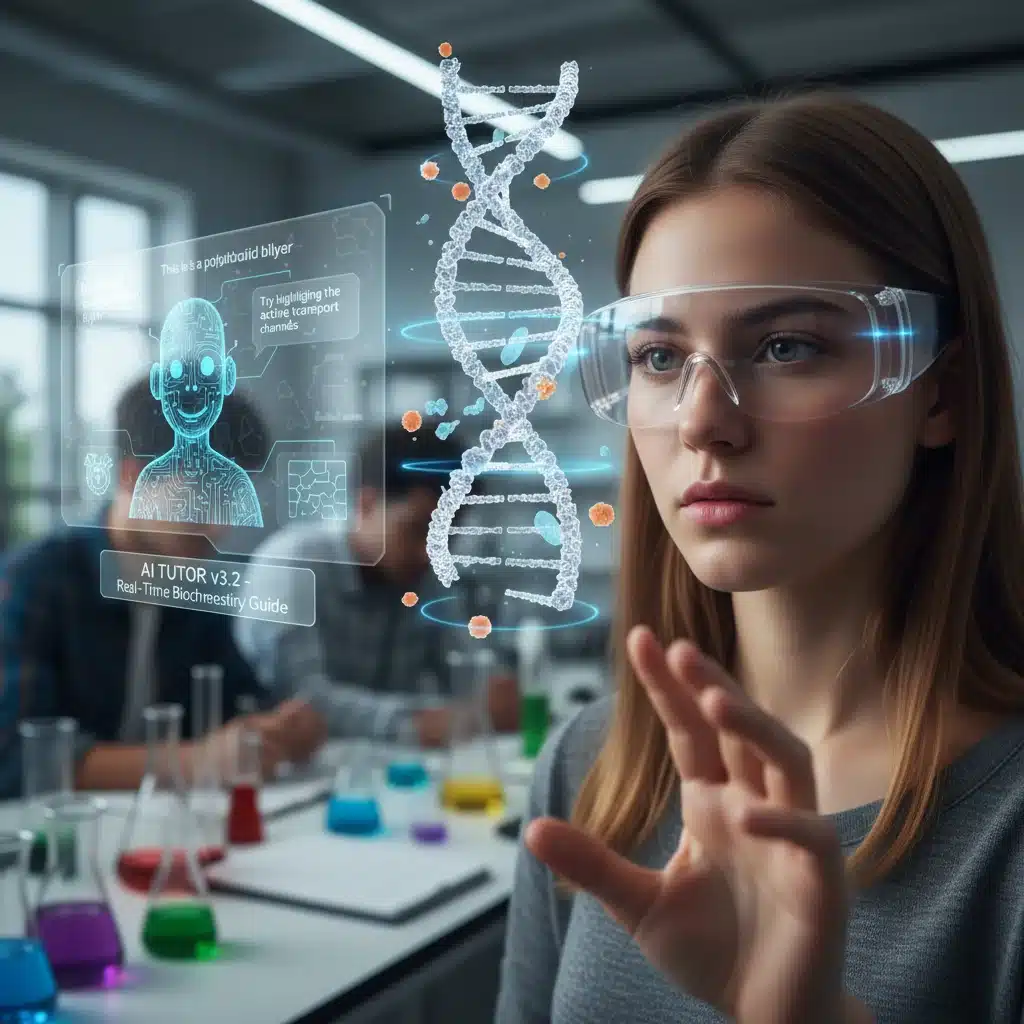
One of the most significant promises of AI in US higher education is the ability to deliver truly personalized learning experiences. Traditional education often struggles with a one-size-fits-all approach, which can leave some students disengaged or struggling while others are not adequately challenged. By 2026, AI-powered platforms will be commonplace, analyzing student performance, learning styles, and preferences to adapt content, pace, and instructional methods. Imagine an AI tutor that identifies your specific areas of weakness in calculus and generates custom practice problems, or an AI-driven system that recommends supplementary materials based on your preferred learning medium – be it video, interactive simulations, or text.
This personalization extends beyond mere content delivery. AI will help create adaptive assessments that evolve based on student responses, providing more accurate evaluations of understanding rather than just memorization. For instance, if a student consistently masters a concept, the AI might present more complex challenges or move on to the next topic, ensuring optimal engagement and efficiency. Conversely, if a a student struggles, the AI could offer alternative explanations, break down concepts into smaller steps, or suggest different learning strategies. This bespoke educational path will empower students to learn at their own rhythm, maximizing comprehension and retention.
The impact of AI on US higher education in this regard is not just about academic performance; it’s about fostering a deeper, more meaningful engagement with the material. When learning feels tailored and relevant, students are more likely to be motivated and take ownership of their education. This shift will equip them with not just knowledge, but also the critical thinking and problem-solving skills necessary for a rapidly changing world.
Enhanced Student Support and Mentorship: AI as an Academic Ally
Beyond the classroom, AI is set to revolutionize student support services. From admissions to graduation, universities are grappling with the challenge of providing adequate and timely support to a diverse student body. By 2026, AI tools will significantly augment these services, making them more accessible and proactive.
Think of AI-powered chatbots that can answer common student queries about financial aid, course registration, or campus resources 24/7, freeing up human advisors to focus on more complex, personalized guidance. These chatbots can be trained on vast datasets of university policies and FAQs, providing instant and accurate information. Furthermore, AI can act as an early warning system, identifying students who might be at risk of falling behind academically or struggling with mental health issues based on their engagement patterns, academic performance, and even sentiment analysis from online interactions. This allows university staff to intervene proactively, offering support before problems escalate.
Academic advising will also see a transformation. AI could analyze a student’s academic history, career aspirations, and even local job market trends to recommend optimal course sequences, minors, and extracurricular activities. This intelligent guidance ensures students are making informed decisions that align with their long-term goals. While AI won’t replace human mentors, it will empower them with better data and insights, allowing them to provide more targeted and effective support.
Moreover, AI can facilitate peer-to-peer learning by intelligently connecting students with similar academic interests or those who can benefit from mutual tutoring, fostering a more collaborative and supportive learning community.
AI in Research and Innovation: Expanding Academic Frontiers
The research landscape within US higher education is already experiencing the transformative power of AI, and this will only accelerate by 2026. Students, particularly those in graduate programs or engaging in undergraduate research, will find AI to be an indispensable tool. AI can process and analyze massive datasets far more efficiently than humans, identify patterns, and even generate hypotheses. This capability will speed up discovery across all disciplines, from scientific research and medical breakthroughs to humanities and social sciences.
Imagine an AI assistant that can sift through millions of research papers to identify relevant literature for a student’s thesis, or an AI that can simulate complex experiments, reducing the need for costly and time-consuming physical trials. AI-powered tools will aid in data visualization, statistical analysis, and even the drafting of research papers, allowing students and faculty to focus on higher-level critical thinking and interpretation rather than tedious manual tasks.
Furthermore, AI itself will become a significant field of study and innovation within universities. More departments will offer specialized courses and programs in AI, machine learning, and data science, preparing students for the burgeoning job market in these areas. Universities will also become hubs for AI research and development, fostering interdisciplinary collaborations that push the boundaries of what AI can achieve. Students will not just be users of AI; many will be creators and innovators of the next generation of AI technologies.
Curriculum Evolution: Preparing for an AI-Driven Workforce
The integration of AI into US higher education necessitates a fundamental re-evaluation of curricula. By 2026, and certainly beyond, universities will be under increasing pressure to equip students with the skills required to thrive in an AI-driven workforce. This means not only understanding AI technologies but also developing uniquely human skills that complement AI capabilities.
Critical thinking, creativity, complex problem-solving, ethical reasoning, and emotional intelligence will become even more paramount. While AI can automate many routine tasks, it cannot replicate the nuanced judgment, innovative thought, or empathetic understanding that humans bring. Therefore, curricula will emphasize projects that require these higher-order skills, often in collaboration with AI tools. For example, students might use AI to analyze market trends but then apply their creativity to develop novel business strategies based on those insights.
Moreover, digital literacy will expand to include AI literacy. Students across all disciplines will need to understand how AI works, its limitations, its ethical implications, and how to effectively use AI tools in their respective fields. This includes understanding data privacy, algorithmic bias, and the societal impact of AI. Universities will increasingly embed AI ethics and responsible AI development into their programs, ensuring that future professionals are not just technically proficient but also ethically conscious.
New interdisciplinary programs will emerge, blending traditional subjects with AI. For instance, ‘AI for Healthcare,’ ‘AI in Law,’ or ‘AI for Creative Arts’ will become common, reflecting the pervasive nature of AI across all sectors. This curriculum evolution is crucial for ensuring that graduates are not just prepared for today’s jobs but are adaptable and resilient for the jobs of tomorrow.
Ethical Considerations and Challenges: Navigating the AI Frontier Responsibly
While the benefits of AI in US higher education are vast, its integration also presents significant ethical considerations and challenges that universities must address proactively. By 2026, discussions around data privacy, algorithmic bias, and the potential for over-reliance on AI will be central to policy-making and pedagogical practices.
Data Privacy: AI systems thrive on data, and educational institutions collect vast amounts of student data. Ensuring the privacy and security of this sensitive information is paramount. Universities will need robust policies and technologies to protect student data from breaches and misuse, making transparency about data collection and usage a critical component of their AI strategies.
Algorithmic Bias: AI algorithms are only as unbiased as the data they are trained on. If historical data reflects societal biases, AI systems can perpetuate or even amplify these biases in areas like admissions, grading, or career recommendations. Universities must actively work to identify and mitigate algorithmic bias, ensuring equitable outcomes for all students. This requires diverse teams in AI development and continuous auditing of AI systems.
Over-reliance and Critical Thinking: There’s a concern that students might become overly reliant on AI tools, potentially hindering the development of their critical thinking and problem-solving skills. Educators will need to design assignments and learning activities that leverage AI as a tool for augmentation, not replacement, of human intellect. The focus should remain on developing students’ capacity to understand, evaluate, and critically engage with AI-generated outputs.
Academic Integrity: The rise of AI tools like advanced language models poses new challenges to academic integrity. Universities will need to adapt their policies and develop new methods for assessing student work in an era where AI can generate sophisticated essays or solve complex problems. This might involve shifting towards more project-based learning, oral examinations, or assessments that require unique human insights and ethical considerations.
Addressing these challenges requires a collaborative effort involving educators, technologists, policymakers, and students themselves. The goal is to harness the power of AI responsibly, ensuring it serves to enhance, rather than diminish, the quality and integrity of US higher education.
The Role of Educators: From Instructors to Facilitators
The integration of AI will also profoundly impact the role of educators in US higher education. By 2026, faculty members will increasingly transition from being sole purveyors of information to becoming facilitators of learning, guides, and mentors in an AI-rich environment. AI can handle many of the repetitive aspects of teaching, such as grading routine assignments, providing immediate feedback on basic concepts, and even generating lesson plans.
This shift frees up educators to focus on higher-value activities: fostering critical thinking, facilitating complex discussions, designing innovative learning experiences, and providing personalized mentorship. Faculty will need to develop new skills, including understanding how to effectively integrate AI tools into their pedagogy, interpret AI-generated data about student performance, and teach students how to ethically and effectively use AI.
Professional development programs will be crucial to equip faculty with these new competencies. Universities will invest in training to help educators leverage AI to create more engaging and effective learning environments. The human element of teaching—empathy, inspiration, and the ability to connect with students on a personal level—will become even more valuable in an AI-augmented classroom. Educators will be tasked with nurturing the uniquely human skills that AI cannot replicate, preparing students for a future where collaboration with intelligent machines is the norm.
Accessibility and Inclusivity: Bridging Gaps with AI
Another significant impact of AI on US higher education, particularly by 2026, will be its potential to enhance accessibility and inclusivity. AI tools can break down barriers for students with diverse needs, creating a more equitable learning environment.
For students with disabilities, AI offers a range of assistive technologies. AI-powered transcription services can provide real-time captions for lectures, making content accessible for hearing-impaired students. Text-to-speech and speech-to-text tools can assist visually impaired students or those with learning disabilities. AI can also adapt interfaces and content presentation to suit various cognitive needs, ensuring that all students can engage with educational materials effectively. For example, an AI could automatically adjust the complexity of language or provide visual aids based on a student’s reading comprehension level.
Furthermore, AI can help address language barriers for international students or those for whom English is a second language. Real-time translation tools and AI tutors capable of communicating in multiple languages can significantly improve comprehension and participation. By providing personalized support and adapting learning environments, AI can help reduce achievement gaps and foster a more inclusive academic community, ensuring that talent from all backgrounds can flourish.
Career Preparation and the Future Workforce: Beyond the Classroom
The ultimate goal of higher education is to prepare students for successful careers and meaningful lives. The impact of AI on US higher education extends directly into career preparation. By 2026, AI tools will be integral to career services, helping students navigate a rapidly changing job market.
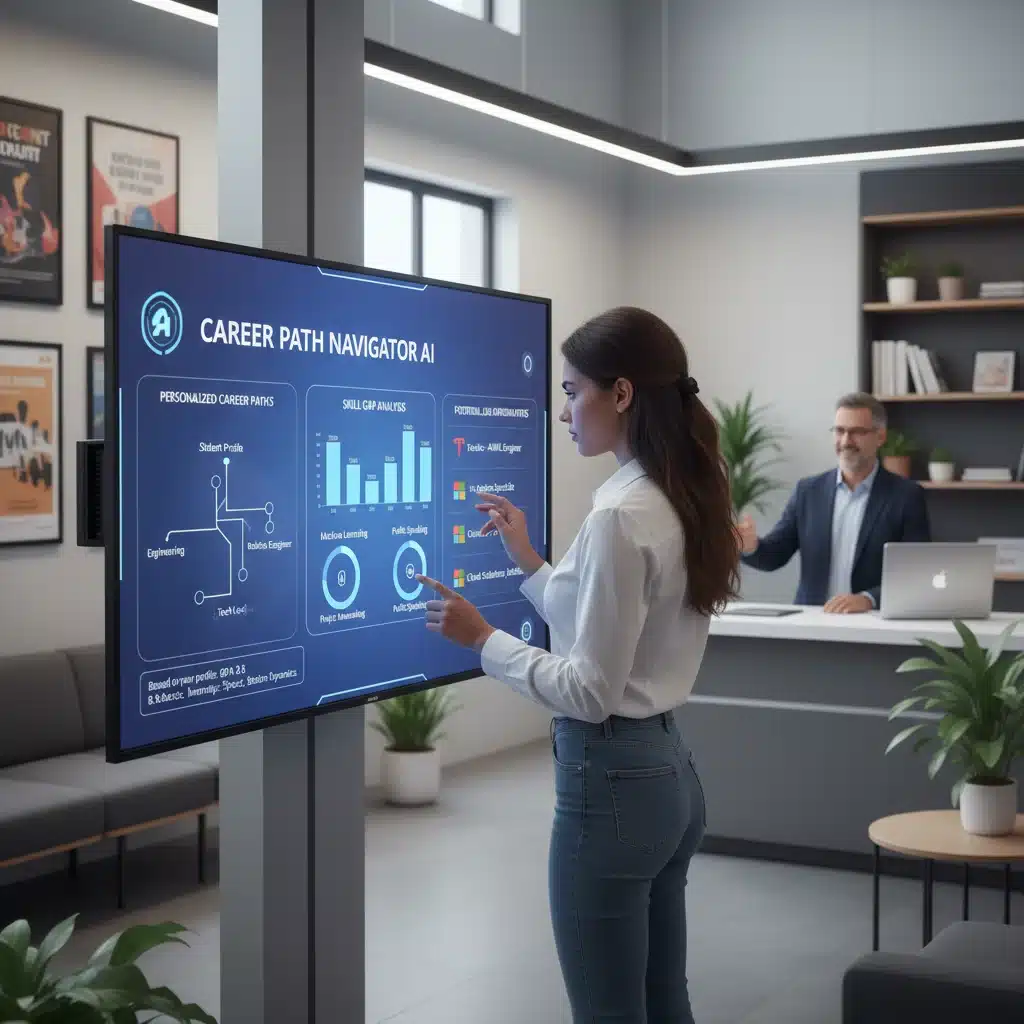
AI-powered career guidance platforms will analyze a student’s skills, academic performance, extracurricular activities, and even personality traits to recommend personalized career paths and identify skill gaps. These systems can scour job boards and industry reports to provide real-time insights into emerging job roles and in-demand skills. Students can receive recommendations for courses, certifications, or internships that will make them more competitive in their chosen fields.
Moreover, AI can assist with resume building and interview preparation, providing personalized feedback on communication style and content. Virtual reality (VR) simulations powered by AI can offer realistic interview practice, helping students build confidence and refine their responses. Universities will increasingly collaborate with industry partners to ensure their AI-driven career services are aligned with the actual needs of employers.
Beyond specific job skills, students will be prepared to work alongside AI in their future professions. This includes understanding how to leverage AI for data analysis, automation, and decision-making, as well as developing the ‘human’ skills—creativity, critical thinking, and ethical judgment—that complement AI capabilities. The future workforce will be one where human-AI collaboration is the norm, and US higher education is rapidly adapting to prepare students for this reality.
Beyond 2026: The Long-Term Vision for AI in US Higher Education
Looking beyond 2026, the integration of AI in US higher education will continue to deepen and evolve. We can anticipate even more sophisticated AI systems that seamlessly blend into the academic experience, becoming almost invisible in their functionality. Imagine cognitive AI assistants that learn alongside students, predicting their needs, suggesting relevant resources before they even ask, and providing truly bespoke educational pathways from enrollment through lifelong learning.
The concept of a ‘digital twin’ of each student might emerge, where an AI model of their learning journey, strengths, and weaknesses helps guide their entire academic and professional development. This could lead to hyper-personalized degree programs, dynamically adjusting based on a student’s evolving interests and career goals. Augmented reality (AR) and virtual reality (VR) will merge with AI to create immersive learning environments where students can interact with complex concepts and simulations in ways previously unimaginable, from exploring historical events to conducting virtual surgical procedures.
Furthermore, AI will play an increasingly vital role in institutional management, optimizing resource allocation, predicting enrollment trends, and enhancing campus safety. The data gathered by AI systems will provide unprecedented insights into the effectiveness of pedagogical approaches and institutional policies, leading to continuous improvement across the board.
The long-term vision is one where US higher education becomes a highly adaptive, responsive, and student-centric ecosystem, leveraging AI to unlock the full potential of every learner. This future is not without its challenges, particularly regarding equity of access and the need for ongoing ethical oversight. However, by embracing AI thoughtfully and strategically, American universities can solidify their position as leaders in global education, preparing generations of students to thrive in an increasingly complex and AI-powered world.
Conclusion: Embracing the AI-Powered Future of Learning
The impact of AI on US higher education by 2026 and beyond is not a matter of if, but how. AI is rapidly becoming an indispensable component of the academic ecosystem, promising to revolutionize personalized learning, student support, research, and career preparation. Students can expect a more dynamic, tailored, and engaging educational experience, where AI acts as a powerful ally in their pursuit of knowledge and skills. While challenges related to ethics, data privacy, and academic integrity must be diligently addressed, the potential benefits of AI are too significant to ignore.
As universities continue to integrate AI, the focus will remain on empowering students to develop the critical thinking, creativity, and adaptability necessary for an AI-driven future. The role of educators will evolve to one of mentorship and facilitation, leveraging AI to enhance human connection and intellectual growth. The future of US higher education is bright, innovative, and increasingly intelligent, preparing students not just for jobs, but for a lifetime of learning and contribution in an ever-evolving world.