
The Top 5 Evolving Education Technologies Reshaping US Classrooms by 2026: An Insider’s Guide
The pace of technological advancement is accelerating, and no sector feels this impact more acutely than education. As we hurtle towards 2026, US classrooms are on the cusp of a profound transformation, driven by an array of evolving education technologies. These innovations are not just incremental improvements; they represent fundamental shifts in how we teach, how students learn, and how educational institutions operate. From personalized learning pathways to immersive virtual experiences, the future of education promises a more engaging, efficient, and equitable learning environment for all.
This insider’s guide will delve into the five most impactful evolving education technologies poised to redefine the US classroom experience by 2026. We will explore their core functionalities, potential benefits, challenges to adoption, and what educators, policymakers, and parents can expect as these technologies become increasingly integrated into the fabric of daily schooling. Understanding these trends is crucial for anyone involved in education, as they will undoubtedly shape the skills and opportunities of the next generation.
1. Artificial Intelligence (AI) and Machine Learning (ML) for Personalized Learning
Perhaps no other technology holds as much promise for revolutionizing education as Artificial Intelligence (AI) and Machine Learning (ML). By 2026, AI won’t just be a buzzword; it will be an indispensable tool in US classrooms, fundamentally altering the personalized learning experience. The core power of AI in education lies in its ability to analyze vast amounts of student data – from assessment scores and engagement levels to learning styles and progress rates – to create highly individualized educational journeys.
The Power of Adaptive Learning Platforms
Adaptive learning platforms, powered by AI, are already making inroads. These systems can dynamically adjust content difficulty, provide targeted feedback, and recommend specific resources based on a student’s real-time performance and understanding. Imagine a student struggling with a particular math concept; an AI tutor could identify the precise area of difficulty, offer alternative explanations, and provide practice problems tailored to reinforce that specific skill, all without direct teacher intervention. This level of personalized attention was previously unimaginable in a traditional classroom setting with a high student-to-teacher ratio.
Beyond remediation, AI can also identify advanced learners and provide them with accelerated or enriched content, ensuring that every student is challenged appropriately and remains engaged. This proactive approach to learning addresses the diverse needs within a single classroom, moving away from the ‘one-size-fits-all’ model that has long characterized traditional education.
Automated Grading and Feedback
Another significant application of AI and ML is in automating administrative tasks, particularly grading and feedback. AI-powered tools can grade multiple-choice questions, short answers, and even essays with increasing accuracy, freeing up valuable teacher time. This time can then be reallocated to more impactful activities, such as one-on-one student interaction, lesson planning, and professional development. Furthermore, AI can provide instant, constructive feedback to students, allowing them to learn from their mistakes immediately rather than waiting for a teacher to review their work days later.
Predictive Analytics for Student Success
AI’s predictive capabilities are also set to transform how schools identify and support at-risk students. By analyzing historical data and current performance trends, AI algorithms can flag students who might be struggling academically, emotionally, or socially before they fall too far behind. This early warning system allows educators to intervene proactively, offering targeted support, counseling, or additional resources, thereby improving retention rates and overall student success. This is a critical component of the evolving education technologies landscape, offering a preventative rather than reactive approach to student welfare.
2. Virtual Reality (VR) and Augmented Reality (AR) for Immersive Learning
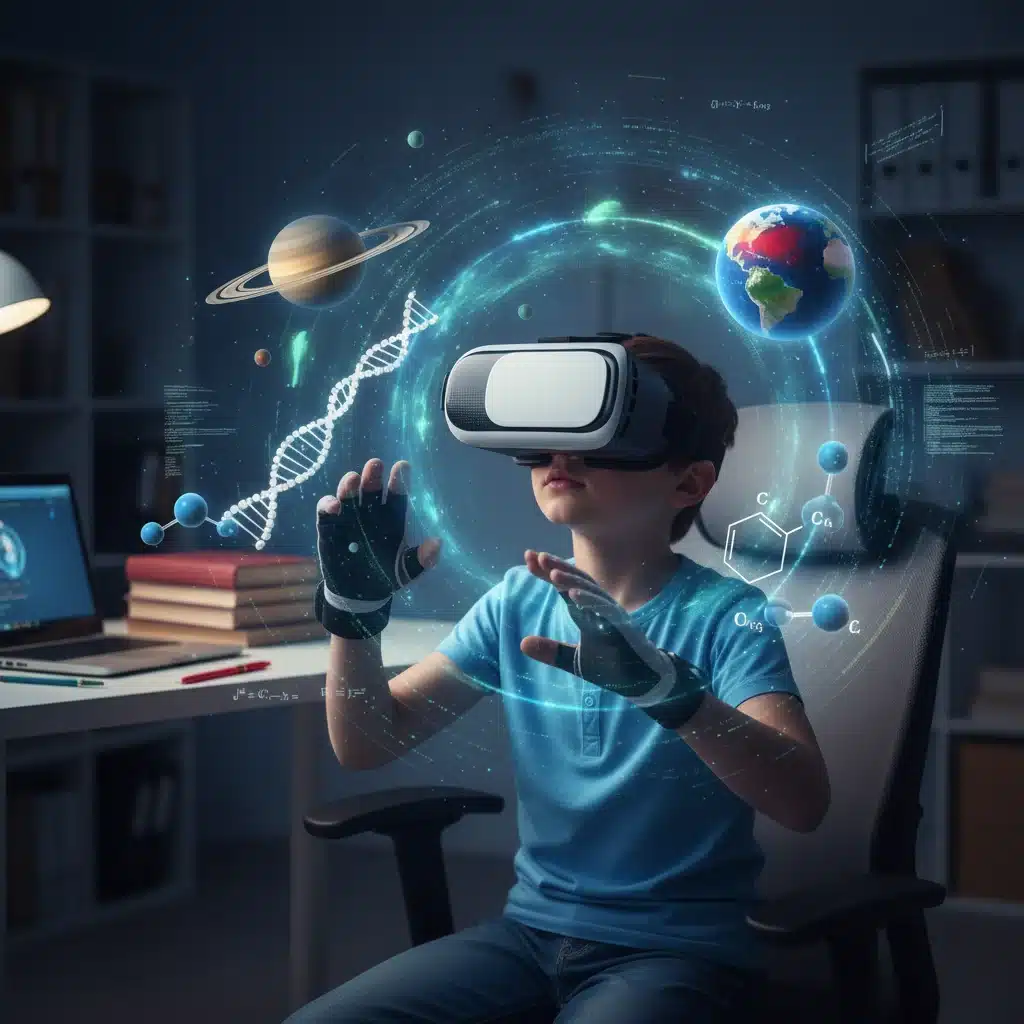
The lines between the physical and digital worlds are blurring, and nowhere is this more exciting than in education with the advent of Virtual Reality (VR) and Augmented Reality (AR). By 2026, these immersive technologies will move beyond novelty status to become integral components of the modern US classroom, offering unparalleled opportunities for experiential learning. The impact of these evolving education technologies on student engagement and comprehension cannot be overstated.
This section discusses immersive technologies, aligning with general educational technology themes. The video can be inserted here to provide a visual example or further explanation related to these innovations.
VR: Stepping into the Learning Experience
Virtual Reality allows students to be fully immersed in simulated environments, transforming abstract concepts into tangible experiences. Imagine a history class where students can walk through ancient Rome, interact with historical figures, or witness pivotal events firsthand. In science, VR can transport students inside the human body to explore organs in 3D, or to the surface of Mars to conduct geological surveys. These experiences go far beyond what textbooks or even videos can offer, providing a deeper understanding and fostering a lasting memory of the subject matter.
For vocational training, VR offers safe and cost-effective simulations for complex tasks, such as surgical procedures, engineering repairs, or piloting aircraft. This allows students to practice critical skills in a risk-free environment before applying them in real-world scenarios.
AR: Enhancing the Real World with Digital Information
Augmented Reality, on the other hand, overlays digital information onto the real world, enriching the learning environment without complete immersion. Using tablets or smartphones, students can point their devices at a textbook diagram of a human heart and see a pulsating, interactive 3D model appear on their screen, allowing them to dissect it digitally or view its internal mechanisms. In a biology class, AR apps can bring specimens to life, showing detailed anatomical structures or behavioral patterns overlaid on a physical model.
AR also has immense potential for field trips and outdoor learning. Imagine a history class visiting a historical site and using an AR app to visualize how the site looked centuries ago, complete with digital reconstructions of buildings and people. This blends the physical and digital to create a richer, more contextualized learning experience.
3. Collaborative Learning Platforms and Digital Citizenship Tools
The modern workforce demands collaboration, communication, and digital literacy. Recognizing this, US classrooms by 2026 will heavily leverage advanced collaborative learning platforms and robust digital citizenship tools, solidifying their place among the most impactful evolving education technologies. These platforms move beyond simple file sharing to create dynamic, interactive spaces where students can co-create, problem-solve, and communicate effectively, preparing them for a globally connected world.
Fostering Teamwork with Advanced Platforms
Collaborative platforms are evolving to include features like real-time document editing, integrated video conferencing, project management tools, and discussion forums. Students can work together on group projects regardless of their physical location, simulating real-world team environments. This not only teaches subject matter but also vital soft skills such as negotiation, conflict resolution, and shared responsibility. Teachers can monitor group progress, provide feedback, and assess individual contributions within these collaborative spaces, offering a more holistic view of student engagement.
These platforms also extend the classroom beyond school hours, allowing students to continue discussions, revise projects, and seek help from peers or teachers at their own pace. This flexibility supports diverse learning schedules and promotes a sense of community among learners.
Building Responsible Digital Citizens
As technology becomes more pervasive, the need for digital citizenship education becomes paramount. By 2026, classrooms will integrate sophisticated tools and curricula designed to teach students how to navigate the digital world safely, ethically, and responsibly. This includes understanding online privacy, recognizing misinformation, combating cyberbullying, and practicing respectful online communication.
Digital citizenship tools might include content filters, online safety modules, and interactive scenarios that teach students to identify and respond to various online threats. Educators will be equipped with resources to foster critical thinking about digital content and to guide students in becoming positive contributors to the online community. This ensures that as students embrace new evolving education technologies, they do so with a strong ethical foundation.
4. Data Analytics and Learning Management System (LMS) Integration
The sheer volume of data generated in educational settings is a goldmine waiting to be fully exploited. By 2026, advanced data analytics, seamlessly integrated with Learning Management Systems (LMS), will be a cornerstone of effective teaching and administrative decision-making in US classrooms. This powerful combination represents a significant leap forward in understanding student performance and optimizing educational strategies, making it one of the most critical evolving education technologies.
Unlocking Insights with Data Analytics
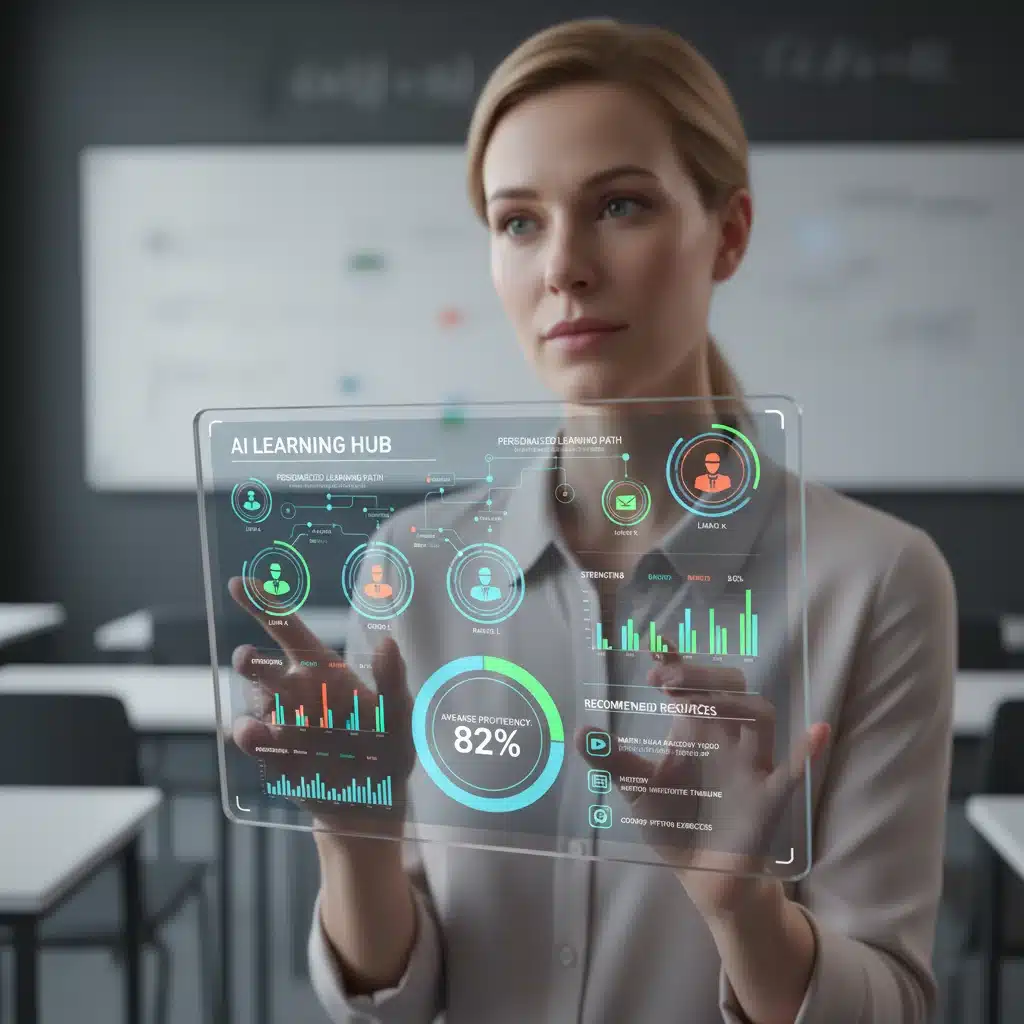
Modern LMS platforms (like Canvas, Blackboard, Moodle, Google Classroom) are becoming increasingly sophisticated, collecting data on everything from student logins and assignment submissions to forum participation and resource access. When combined with advanced analytics, this data provides educators and administrators with unprecedented insights. Teachers can identify specific topics where students collectively struggle, pinpoint individual students who are disengaging, and even predict potential academic challenges before they escalate.
For example, an analytics dashboard might show that a significant number of students consistently spend less time on a particular module or perform poorly on related assessments. This data can prompt a teacher to re-evaluate their teaching approach for that topic, offer supplementary materials, or provide targeted interventions. This data-driven approach moves away from subjective assessments to evidence-based instructional design.
Streamlining Administration and Resource Allocation
Beyond individual classroom insights, data analytics integrated with LMS can inform broader administrative decisions. School leaders can analyze trends across grades, subjects, and demographics to identify systemic issues, evaluate the effectiveness of different programs, and allocate resources more efficiently. For instance, data might reveal that certain professional development initiatives lead to higher student achievement in specific subjects, guiding future training investments.
Furthermore, these systems can streamline administrative tasks like attendance tracking, grade reporting, and communication with parents, creating a more cohesive and efficient educational ecosystem. The goal is to move towards a predictive and proactive model of school management, ensuring that every decision is backed by robust data.
5. Gamification and Esports in Education
Engagement is often the biggest hurdle in education, and by 2026, US classrooms will increasingly turn to gamification and the burgeoning field of esports to captivate students and enhance learning outcomes. These innovative approaches leverage the inherent appeal of games to motivate, challenge, and educate, marking them as compelling evolving education technologies.
Gamification: Making Learning Fun and Rewarding
Gamification involves applying game-design elements and game principles in non-game contexts. In education, this means incorporating points, badges, leaderboards, levels, and narrative quests into lessons and curricula. Instead of traditional homework, students might earn points for completing challenges, unlock new content as they master skills, or collaborate with peers to solve complex problems in a game-like format.
The benefits are manifold: increased motivation, improved retention of information, development of problem-solving skills, and a more positive attitude towards learning. Gamified platforms can make subjects like math, science, and history more interactive and less intimidating, transforming tedious tasks into enjoyable challenges. For example, a history lesson could become a choose-your-own-adventure game where choices impact historical outcomes, or a science experiment could be framed as a mission to save the planet.
Esports: Cultivating Skills Beyond the Screen
Esports, or competitive video gaming, is rapidly gaining legitimacy in educational settings. While some might view it purely as entertainment, organized esports programs in schools and universities are proving to be powerful tools for developing a wide range of academic and social skills. By 2026, high school and even middle school esports leagues will be common, offering students opportunities for scholarships and career pathways.
Participating in esports fosters teamwork, strategic thinking, communication, quick decision-making, and leadership. Students learn about sportsmanship, healthy competition, and the importance of practice and dedication. Furthermore, esports programs often require academic eligibility, incentivizing students to maintain good grades. They also open doors to various career paths beyond professional gaming, including shoutcasting, event management, game development, graphic design, and marketing, all crucial skills in a digital economy. The integration of esports highlights how diverse and impactful evolving education technologies can be.
Challenges and Considerations for Adoption
While the potential of these evolving education technologies is immense, their widespread adoption and effective integration into US classrooms are not without challenges. Addressing these considerations will be crucial for realizing the full promise of these innovations by 2026.
Equity and Access
One of the most significant hurdles is ensuring equitable access to these technologies. The digital divide, which often mirrors socio-economic disparities, means that not all students or school districts have the necessary infrastructure, devices, or internet connectivity. Bridging this gap requires significant investment from federal, state, and local governments, along with partnerships between schools and technology providers. Without equitable access, these technologies risk exacerbating existing inequalities rather than alleviating them.
Teacher Training and Professional Development
Even with the best technology, its effectiveness hinges on the educators who wield it. Many teachers, especially those trained in traditional methods, may lack the skills or confidence to effectively integrate AI, VR, collaborative platforms, or gamification into their curricula. Comprehensive and ongoing professional development is essential, focusing not just on technical proficiency but also on pedagogical strategies for leveraging these tools to enhance learning. Teachers need to be empowered as facilitators of learning in technology-rich environments, not just consumers of technology.
Data Privacy and Security
As more student data is collected and analyzed by AI and LMS platforms, concerns about privacy and security become paramount. Schools and technology providers must implement robust data protection measures, adhere to strict privacy regulations (like FERPA), and be transparent with parents and students about how data is collected, stored, and used. Building trust in these systems is vital for their successful adoption.
Curriculum Alignment and Integration
Simply introducing new technology without aligning it with curriculum goals is unlikely to yield positive results. Educational leaders must thoughtfully integrate these tools into existing curricula, ensuring they support learning objectives and enhance pedagogical practices. This requires careful planning, pilot programs, and continuous evaluation to determine efficacy and make necessary adjustments. The goal is to use technology to amplify learning, not just to replace traditional methods without purpose.
Conclusion: The Future of Learning is Now
The landscape of US education is undergoing a seismic shift, driven by a wave of evolving education technologies. By 2026, Artificial Intelligence, Virtual and Augmented Reality, advanced collaborative platforms, integrated data analytics, and gamification will be at the forefront of this transformation. These innovations promise to create more personalized, immersive, engaging, and data-driven learning environments, preparing students with the critical skills needed for a rapidly changing world.
While challenges related to equity, teacher training, data privacy, and curriculum integration remain, proactive planning and strategic investment can overcome these hurdles. The future of learning is not a distant concept; it is being shaped in classrooms across the nation right now. By embracing these technologies thoughtfully and strategically, educators and institutions can unlock unprecedented opportunities for student success, ensuring that the next generation is not just prepared for the future, but actively empowered to create it. The journey towards a truly modern, technologically advanced educational system is well underway, and the next few years promise to be the most exciting yet for US classrooms.