Vocational Training vs. Traditional Degrees: 2026 US Career Analysis
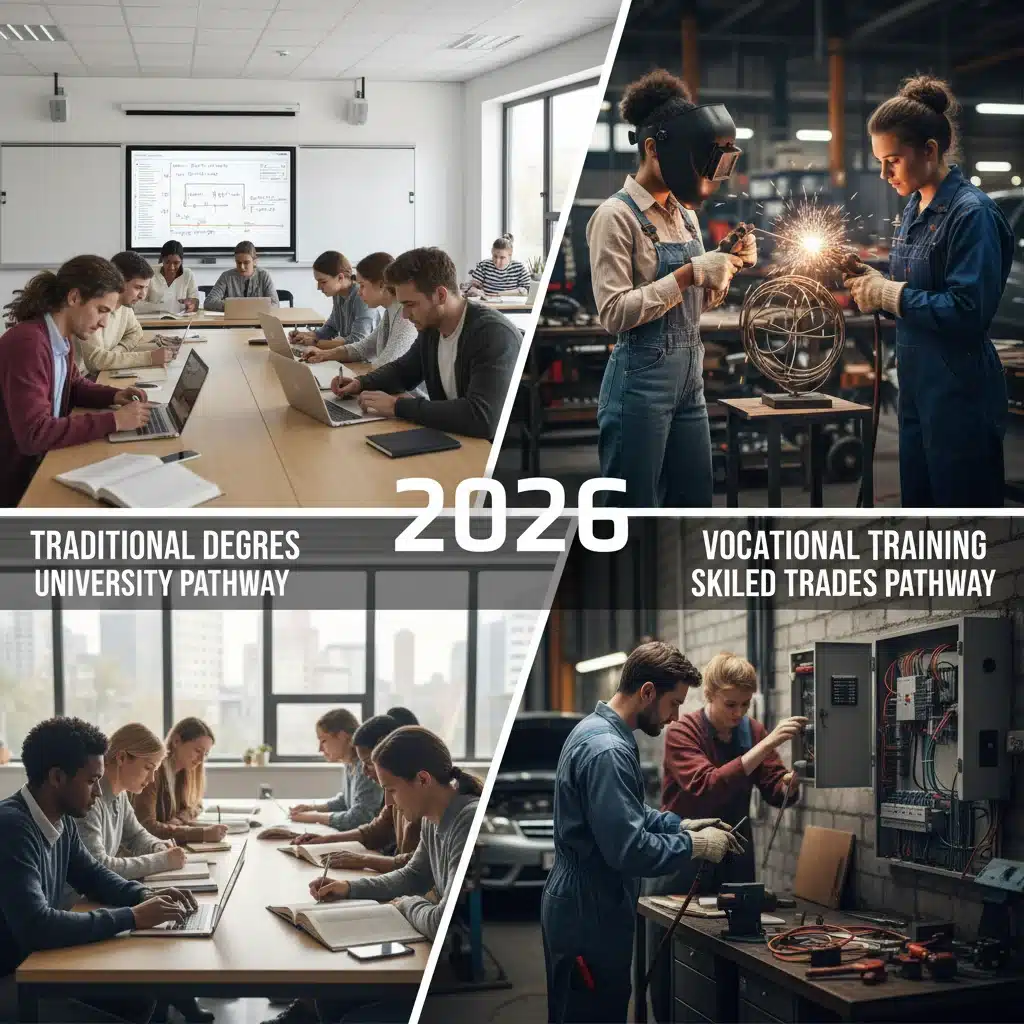
Vocational Training vs. Traditional Degrees: A 2026 Analysis for US Career Seekers
Choosing a career path is one of the most pivotal decisions an individual will make. In the United States, the traditional four-year college degree has long been considered the gold standard for upward mobility and professional success. However, as we look towards 2026 and beyond, the landscape of education and employment is rapidly evolving. A significant shift is occurring, with vocational training emerging as a powerful, often more direct, route to a fulfilling and well-paying career. This comprehensive analysis will delve into the nuances of Vocational vs Traditional Degrees, examining their respective benefits, challenges, and long-term prospects for US career seekers in the coming years.
The debate between pursuing a vocational education and a traditional university degree is more relevant than ever. Economic shifts, technological advancements, and changing societal values are reshaping what employers seek in candidates. This article aims to provide a balanced perspective, equipping you with the insights needed to make an informed decision about your future educational and professional journey.
Understanding the Traditional Degree Pathway in 2026
For decades, the traditional four-year degree has been synonymous with higher education. Universities offer a broad curriculum, fostering critical thinking, research skills, and a comprehensive understanding of various disciplines. Graduates typically emerge with a Bachelor of Arts (BA) or Bachelor of Science (BS) degree, which can serve as a prerequisite for many professional roles and further graduate studies.
The Enduring Value of a Traditional Degree
Even in 2026, a traditional degree holds considerable weight in many sectors. Fields such as medicine, law, advanced research, and many corporate leadership roles almost universally require a bachelor’s degree, often followed by postgraduate qualifications. The value lies not just in the specialized knowledge gained but also in the development of soft skills – communication, problem-solving, analytical thinking, and adaptability – which are highly prized by employers. A university environment also offers unparalleled networking opportunities, exposure to diverse perspectives, and a foundation for lifelong learning.
Challenges and Considerations for Traditional Degrees
However, the traditional degree path is not without its challenges. The most prominent concern for many students and families is the escalating cost of tuition. Student loan debt in the US has reached staggering levels, leading to significant financial burdens for graduates. The return on investment (ROI) for certain degrees has also come under scrutiny. While STEM (Science, Technology, Engineering, Mathematics) and business degrees often lead to high-paying jobs, humanities or arts degrees, while enriching, may not always offer the same immediate financial returns upon graduation, depending on the specific field and individual initiative.
Another factor to consider is the time commitment. A four-year degree, often extending to five or six years for some, delays entry into the full-time workforce, meaning a loss of potential earnings during that period. Furthermore, the curriculum in some traditional programs can sometimes lag behind the rapid pace of industry change, potentially leaving graduates with theoretical knowledge that requires further practical application or reskilling.
Exploring Vocational Training in the 2026 Job Market
Vocational training, also known as trade school, technical education, or career and technical education (CTE), focuses on teaching specific skills required for particular jobs. These programs are typically shorter, more hands-on, and directly aligned with industry demands. In 2026, vocational training is experiencing a renaissance, driven by a growing demand for skilled trades and specialized technicians across various sectors.
The Resurgence of Skilled Trades and Technical Professions
The US economy faces a significant skills gap in numerous trades. Industries like healthcare, manufacturing, construction, information technology, and renewable energy are actively seeking qualified individuals with practical, job-ready skills. Vocational programs are designed to fill these gaps, offering certifications and associate degrees in fields such as:
- HVAC (Heating, Ventilation, and Air Conditioning) Technicians
- Electricians
- Plumbers
- Welders
- Medical Assistants and Technicians (e.g., Dental Hygienists, Radiologic Technologists)
- Automotive Technicians
- IT Support Specialists and Cybersecurity Analysts
- Culinary Arts Professionals
- Industrial Mechanics
- Wind Turbine Technicians
These professions are often characterized by stable employment, competitive wages, and a clear path for career progression. The hands-on nature of the training means graduates are often immediately productive, making them highly attractive to employers.
Advantages of Vocational Training
One of the most compelling advantages of vocational training is its accelerated timeline. Many programs can be completed in a matter of months to two years, allowing individuals to enter the workforce much sooner than their university-educated counterparts. This translates to earlier earning potential and less accumulated student debt. The cost of vocational programs is also generally lower than traditional university tuition.
Furthermore, vocational education is inherently practical. Students learn by doing, gaining real-world experience through apprenticeships, internships, and simulated work environments. This direct application of knowledge ensures that graduates possess the specific competencies employers are looking for, reducing the need for extensive on-the-job training.

Comparing Key Aspects: Vocational vs Traditional Degrees
Cost and Debt
Traditional Degrees: As mentioned, the cost of a four-year university degree can be substantial, often ranging from tens of thousands to over a hundred thousand dollars for tuition alone, not including living expenses. This often necessitates significant student loans, which can impact financial freedom for years after graduation.
Vocational Training: Vocational programs are typically more affordable. Tuition can range from a few thousand to around $30,000 for a comprehensive program. The shorter duration also means fewer years of foregone income and lower living expenses during studies, resulting in less debt and a quicker path to financial independence.
Time Commitment
Traditional Degrees: A bachelor’s degree typically requires four years of full-time study, with many students taking longer. Graduate degrees add further years.
Vocational Training: Most vocational programs can be completed in anywhere from six months to two years, making them ideal for individuals eager to enter the workforce quickly or those looking for a career change without a lengthy academic commitment.
Job Market Demand and Stability (2026 Outlook)
Traditional Degrees: Demand varies significantly by major. STEM, healthcare, and certain business fields continue to have strong demand. However, competition can be fierce for popular roles, and some liberal arts graduates may face challenges finding immediate employment directly related to their major.
Vocational Training: Many vocational fields are experiencing high demand due to an aging workforce and a persistent skills gap. Trades like electricians, plumbers, and HVAC technicians are always in demand, as are various healthcare support roles. The job stability in these fields is often robust, as these services are essential regardless of economic fluctuations.
Earnings Potential
Traditional Degrees: Graduates with bachelor’s degrees generally earn more over their lifetime than those with only a high school diploma. However, the salary range is vast, depending on the field, industry, and individual performance. A software engineer with a bachelor’s degree might earn significantly more than an entry-level professional in certain humanities fields.
Vocational Training: While historically perceived as lower-earning, many skilled trades and technical professions now offer highly competitive wages, often surpassing those of some bachelor’s degree holders, especially in the early career stages. For example, a certified welder or an experienced HVAC technician can earn a six-figure salary, particularly if they own their own business or specialize in high-demand areas. The median salary for many skilled trades is often higher than the median for all occupations.
Skill Development and Learning Style
Traditional Degrees: Emphasizes theoretical knowledge, critical thinking, research, and analytical skills. Learning is often lecture-based, essay-driven, and research-intensive.
Vocational Training: Focuses on practical, hands-on skills directly applicable to a specific job. Learning is experiential, often involving workshops, labs, and real-world projects. This style is particularly beneficial for kinesthetic learners or those who prefer immediate application of knowledge.
Hybrid Models and the Evolving Educational Landscape
The distinction between Vocational vs Traditional Degrees is becoming increasingly blurred. Many institutions are now offering hybrid models that combine the best of both worlds. Community colleges, for instance, often provide both transfer programs (leading to a four-year degree) and robust vocational programs. Some universities are also integrating more practical, skill-based components into their curricula, recognizing the importance of job-readiness.
Stackable Credentials and Lifelong Learning
The concept of ‘stackable credentials’ is gaining traction. This allows individuals to earn smaller, job-specific certifications or associate degrees and then ‘stack’ them to build towards a higher degree or specialized expertise. This flexible approach supports lifelong learning and enables individuals to adapt to changing job market demands without committing to a single, lengthy educational path upfront.
For example, someone might earn a certificate in web development, enter the workforce, and later pursue an associate’s degree in IT, eventually leading to a bachelor’s in computer science, all while gaining valuable work experience at each stage.
Making the Right Choice for You in 2026
The decision between Vocational vs Traditional Degrees is deeply personal and depends on several factors:
1. Your Career Aspirations:
Do you envision yourself in a profession that absolutely requires a bachelor’s or advanced degree (e.g., doctor, lawyer, professor)? Or are you drawn to a hands-on career that addresses immediate needs in the community (e.g., electrician, nurse, culinary chef)? Research specific job requirements for your desired roles.
2. Learning Style:
Do you thrive in a theoretical, academic environment, enjoying research and abstract concepts? Or do you prefer practical, hands-on learning where you can immediately apply what you’ve learned?
3. Financial Situation and Risk Tolerance:
Can you afford the cost of a four-year degree without incurring crippling debt? Are you comfortable with a longer educational journey before entering full-time employment? Vocational training often presents a lower financial barrier to entry and a quicker path to earning.
4. Job Market Outlook:
While both paths offer opportunities, research the specific job growth projections and demand for your chosen field. The Bureau of Labor Statistics (BLS) is an excellent resource for this information, offering detailed insights into various occupations for 2026 and beyond. Many vocational fields are projected to grow faster than the average for all occupations.
5. Long-Term Goals:
Consider where you want to be in 5, 10, or 20 years. Some vocational careers offer significant entrepreneurial opportunities (e.g., starting your own plumbing or HVAC business), while a traditional degree might be a stepping stone to corporate leadership or research. Both paths can lead to substantial personal and professional growth.
The Future of Work: A Blended Approach
As 2026 approaches, the most successful individuals will likely be those who embrace a blended approach to education and skill development. This means recognizing that formal education, whether vocational or traditional, is just the beginning. Continuous learning, adaptability, and the willingness to acquire new skills throughout one’s career will be paramount.
Employers are increasingly valuing a combination of foundational knowledge (often from traditional degrees) and specific, practical skills (often from vocational training). Micro-credentials, online courses, and industry certifications are becoming crucial complements to both pathways, allowing professionals to stay current in a rapidly changing world.
The stigma once associated with vocational training has largely evaporated. Society is increasingly recognizing the immense value and economic contribution of skilled tradespeople and technical professionals. These are not ‘fallback’ options but deliberate, strategic career choices that offer excellent prospects.
Conclusion: A Smarter Choice for 2026 and Beyond
The decision between Vocational vs Traditional Degrees is no longer a simple dichotomy. Both pathways offer distinct advantages and can lead to successful, rewarding careers in the US job market of 2026. Traditional degrees provide a broad academic foundation and are essential for certain professions, but they come with significant time and financial commitments.
Vocational training, on the other hand, offers a faster, more affordable, and highly practical route to employment in high-demand fields, often leading to competitive salaries and strong job security. The key is to conduct thorough research, understand your personal strengths and aspirations, and consider the evolving demands of the job market.
Ultimately, the ‘best’ path is the one that aligns with your individual goals, learning style, and financial realities. By carefully evaluating all options, US career seekers can make an informed choice that sets them up for success in the dynamic professional landscape of 2026 and for many years to come. The future is bright for those who choose wisely and commit to continuous learning, regardless of their initial educational route.