Global Supply Chain Realignments 2026: U.S. Import & Export Shifts

Global Supply Chain Realignments in 2026: How U.S. Imports and Exports Are Shifting
The global economic landscape is in perpetual motion, a dynamic tapestry woven with threads of geopolitics, technological innovation, environmental imperatives, and evolving consumer demands. As we approach 2026, the United States finds itself at a pivotal juncture, experiencing significant U.S. Supply Chain Shifts that are fundamentally reshaping its import and export dynamics. The era of hyper-globalization, characterized by an almost singular focus on cost efficiency, is giving way to a more nuanced approach, prioritizing resilience, security, and sustainability. This comprehensive analysis delves into the multifaceted factors driving these realignments, exploring their implications for businesses, policymakers, and the global economy.
For decades, the U.S. supply chain model was largely optimized for just-in-time delivery and lowest-cost sourcing, often leading to extensive reliance on distant manufacturing hubs, particularly in Asia. While this approach delivered significant economic benefits, the vulnerabilities inherent in such a system were starkly exposed by recent global disruptions—from trade wars and geopolitical tensions to the COVID-19 pandemic and natural disasters. These events served as a powerful catalyst, compelling stakeholders across industries to re-evaluate their strategies and embark on a path of profound transformation. The focus is no longer solely on lean operations but on building robust, adaptable, and secure supply networks that can withstand future shocks. This shift is not merely reactive; it is a proactive recalibration aimed at safeguarding economic stability and national security.
Geopolitical Tensions and Trade Policy: A New Era for U.S. Supply Chain Shifts
One of the most significant drivers of the current U.S. Supply Chain Shifts is the escalating geopolitical landscape. The rivalry between major global powers, coupled with regional conflicts and political instability, has injected a new layer of complexity and risk into international trade. Governments worldwide are increasingly viewing supply chains not just as economic conduits but as instruments of national power and security. For the United States, this translates into a concerted effort to reduce dependence on potential adversaries and strengthen alliances with trusted partners.
Trade policies are evolving rapidly to reflect these geopolitical realities. Tariffs, export controls, and restrictions on technology transfers have become more frequent tools used by governments to protect strategic industries and exert influence. The U.S. administration, regardless of party, has shown a consistent inclination towards industrial policies aimed at boosting domestic manufacturing and reducing reliance on foreign supply for critical goods. This includes incentives for reshoring and nearshoring, particularly in sectors deemed vital for national security, such as semiconductors, pharmaceuticals, and rare earth minerals.
The CHIPS and Science Act, for instance, is a prime example of legislation designed to revitalize domestic semiconductor manufacturing, directly impacting the import patterns of these crucial components. Similar initiatives are underway in other strategic sectors, signaling a broader governmental commitment to de-risk key supply chains. This push for greater self-sufficiency and diversification will undoubtedly lead to a restructuring of traditional trade flows, impacting which countries the U.S. imports from and exports to. Businesses are now factoring geopolitical risk much more heavily into their sourcing decisions, moving beyond purely economic considerations to embrace a more holistic view of supply chain resilience.
The Reshoring and Nearshoring Phenomenon: Bringing Production Closer to Home
The concept of reshoring (bringing manufacturing back to the U.S.) and nearshoring (moving manufacturing to neighboring countries like Mexico or Canada) has gained considerable traction as a direct response to the vulnerabilities exposed during recent crises. These strategies are central to the ongoing U.S. Supply Chain Shifts. While the initial motivation might have been security and resilience, the economic arguments for these approaches are also strengthening.
Automation and advanced manufacturing technologies are making domestic production more competitive by reducing labor costs as a proportion of total production costs. Furthermore, the rising costs of international shipping, coupled with increasing consumer demand for faster delivery and greater transparency, are making localized production more attractive. Companies are realizing that the total cost of ownership extends beyond the unit price of goods, encompassing inventory holding costs, lead time variability, and the risk of disruption.
For U.S. imports, this trend means a potential decrease in goods sourced from distant low-cost countries, replaced by increased domestic production or imports from Mexico and Canada. The U.S.MCA (United States-Mexico-Canada Agreement) further incentivizes this regional integration, fostering a more robust North American manufacturing ecosystem. For exports, a stronger domestic manufacturing base could lead to an increase in specialized, high-value exports, particularly in advanced technology sectors where the U.S. maintains a competitive edge. This shift also creates opportunities for new domestic industries and job creation, aligning with broader economic policy goals.
However, reshoring and nearshoring are not without their challenges. They require significant capital investment, a skilled workforce, and robust infrastructure. The transition will be gradual and sector-specific, but the direction of travel is clear: a more regionally focused and less globally dispersed supply chain network for the United States.
Technological Advancements: The Digital Backbone of Future Supply Chains
Technology is not just an enabler but a transformative force driving the U.S. Supply Chain Shifts towards 2026. The adoption of Industry 4.0 technologies—including artificial intelligence (AI), machine learning (ML), blockchain, the Internet of Things (IoT), and advanced robotics—is revolutionizing every aspect of the supply chain, from sourcing and manufacturing to logistics and last-mile delivery.
AI and ML are being deployed for predictive analytics, demand forecasting, and risk management, allowing businesses to anticipate disruptions and optimize inventory levels more effectively. This enhanced foresight is crucial for building resilient supply chains that can adapt quickly to unforeseen events. IoT devices provide real-time visibility into the movement and condition of goods, improving traceability and reducing waste. Blockchain technology offers secure and transparent record-keeping, enhancing trust and efficiency across complex supply networks.

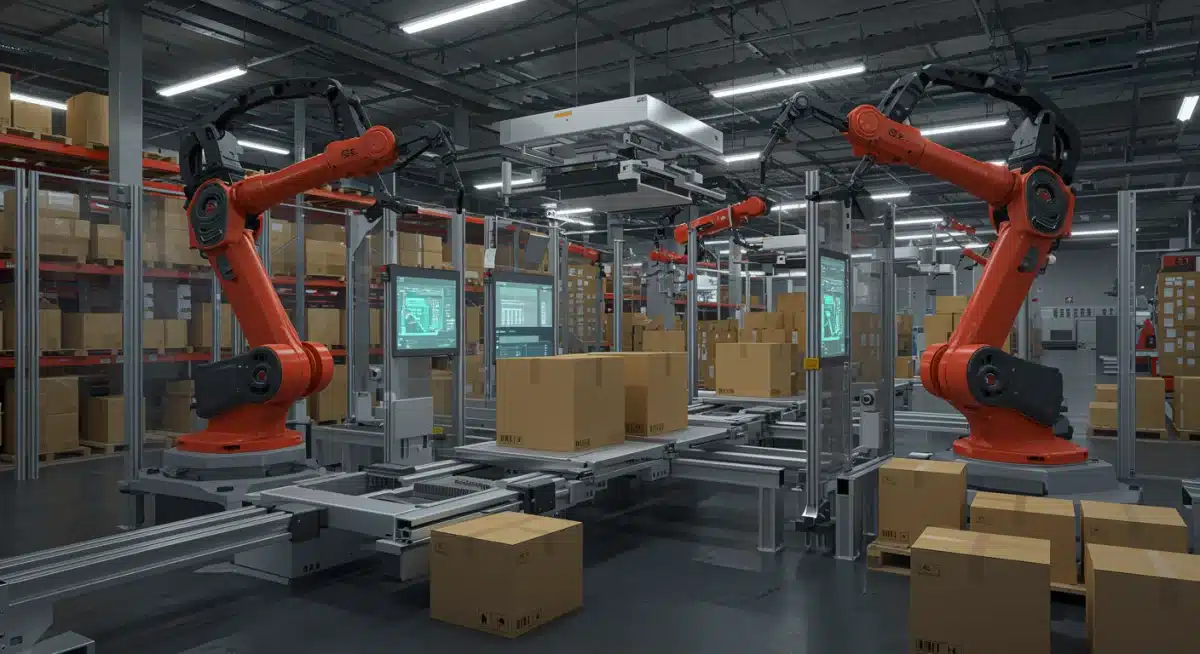
Automation, particularly in warehousing and logistics, is also playing a critical role. Robotic process automation (RPA) and automated guided vehicles (AGVs) are increasing efficiency, reducing labor costs, and speeding up order fulfillment. This technological leap is particularly important for the U.S., where labor costs are higher than in many traditional manufacturing hubs, making automation a key factor in domestic competitiveness.
These technological advancements contribute to both import and export dynamics. On the import side, better data analytics can lead to more strategic sourcing decisions, identifying reliable suppliers and optimizing procurement processes. For exports, technology can streamline customs procedures, reduce transit times, and open up new markets by making international trade more efficient and less costly. The U.S., as a leader in technological innovation, is well-positioned to leverage these advancements to its advantage, solidifying its role as a hub for high-tech manufacturing and services.
Sustainability and ESG Factors: Greening the U.S. Supply Chain Shifts
Environmental, Social, and Governance (ESG) considerations, particularly sustainability, are no longer peripheral concerns but core drivers of supply chain strategy. Growing consumer awareness, stricter regulatory frameworks, and investor pressure are compelling U.S. businesses to build more environmentally friendly and ethically responsible supply chains. This focus on sustainability is profoundly influencing U.S. Supply Chain Shifts.
Companies are increasingly scrutinizing their carbon footprint across the entire supply chain, from raw material extraction to manufacturing, transportation, and end-of-life disposal. This often leads to a preference for local sourcing (reducing transportation emissions), investment in renewable energy for manufacturing facilities, and the adoption of more sustainable packaging solutions. The demand for products with clear environmental certifications and ethical sourcing credentials is on the rise, influencing both import decisions and export market access.
For U.S. imports, this means a greater emphasis on supplier audits, due diligence regarding labor practices and environmental compliance, and a potential shift away from suppliers who do not meet stringent ESG standards. Businesses might opt for higher-cost, but more sustainable, imported components or finished goods. On the export front, U.S. companies that can demonstrate strong sustainability practices and offer eco-friendly products will gain a competitive advantage in global markets, particularly in Europe and other regions with advanced environmental regulations.
The circular economy principles are also gaining traction, encouraging businesses to design products for longevity, reuse, and recycling. This necessitates closer collaboration with suppliers and customers, potentially leading to more localized loops for materials and components. The push for green logistics, including electric vehicles for last-mile delivery and optimizing shipping routes, will also contribute to a more sustainable and efficient U.S. supply chain, impacting overall trade flows and infrastructure investments.
Infrastructure Investment and Logistics Modernization
The efficiency of any supply chain is inextricably linked to the quality of its infrastructure. Recognizing this, the U.S. is undertaking significant investments in modernizing its ports, roads, railways, and airports. These infrastructure enhancements are crucial for facilitating the anticipated U.S. Supply Chain Shifts, ensuring that goods can move efficiently and cost-effectively both domestically and internationally.
Port congestion, a significant issue during recent disruptions, is being addressed through automation, expansion projects, and improved intermodal connections. Enhanced rail and road networks are vital for improving the speed and reliability of ground transportation, especially as nearshoring and domestic manufacturing increase the volume of internal freight movement. Digitalization of customs processes and port operations will also play a key role in speeding up the flow of imports and exports.
The modernization of logistics also extends to the development of advanced distribution centers and warehousing facilities. These facilities are increasingly equipped with automation, robotics, and sophisticated inventory management systems to handle higher volumes and complex order fulfillment processes. The growth of e-commerce, which demands rapid and precise delivery, is a major catalyst for these investments.
These infrastructure improvements directly impact both U.S. imports and exports. More efficient ports and transportation networks reduce shipping times and costs, making U.S. goods more competitive in international markets and streamlining the entry of imported goods. Improved domestic logistics supports the growth of reshoring by ensuring that domestically produced goods can reach consumers and other businesses efficiently. The strategic allocation of these investments will play a critical role in shaping the geographic distribution of manufacturing and trade activities within the U.S.
Impact on Specific Sectors and Industries
The U.S. Supply Chain Shifts will not impact all sectors equally. Some industries are particularly vulnerable to disruption, while others are poised to benefit significantly from the ongoing realignments. Understanding these sector-specific impacts is crucial for businesses and policymakers alike.
- Semiconductors and Electronics: This sector has been at the forefront of supply chain discussions. The push for domestic manufacturing of chips is a monumental undertaking, aiming to reduce reliance on East Asian production. This will lead to a decrease in imported chips over time, coupled with a potential increase in high-value U.S. semiconductor exports.
- Pharmaceuticals and Medical Devices: The pandemic highlighted critical dependencies on foreign suppliers for essential medicines and medical equipment. Expect continued efforts to reshore and nearshore production, diversify sourcing, and build strategic national stockpiles. This will impact both raw material imports and finished product imports.
- Automotive: The automotive industry, with its complex global supply chains, is also undergoing significant transformation. The transition to electric vehicles (EVs) creates new dependencies on critical minerals (lithium, cobalt, nickel) and battery manufacturing. The U.S. is actively seeking to build out its domestic EV supply chain, from mining and processing to battery production and vehicle assembly, influencing both raw material imports and finished vehicle exports.
- Critical Minerals: The demand for critical minerals, essential for high-tech industries and green technologies, is surging. The U.S. is increasing efforts to secure these minerals through diversified imports (reducing reliance on single sources) and exploring domestic mining and recycling capabilities. This will redefine import relationships for these vital resources.
- Agriculture: While less susceptible to manufacturing reshoring, the agricultural sector faces its own supply chain challenges, including climate change impacts, labor shortages, and geopolitical influences on food security. U.S. agricultural exports remain crucial, but the focus will be on maintaining competitiveness through sustainable practices and efficient logistics.
These examples illustrate a broader trend: a strategic re-evaluation of where and how goods are produced and moved, driven by a combination of economic, security, and environmental factors. Companies within these sectors must proactively adapt their supply chain strategies to remain competitive and resilient in the evolving landscape.
Challenges and Opportunities for U.S. Supply Chain Shifts
The ongoing U.S. Supply Chain Shifts present both substantial challenges and unprecedented opportunities. On the challenge side, the transition to more resilient and diversified supply chains is expensive and complex. It requires significant capital investment, workforce retraining, and overcoming established business models that have relied on globalized sourcing for decades.
Inflationary pressures, labor shortages, and geopolitical uncertainties continue to pose headwinds. Striking the right balance between cost efficiency, resilience, and sustainability will be a continuous balancing act for businesses. Furthermore, the risk of protectionist policies leading to trade fragmentation and reduced global cooperation remains a concern, potentially hindering the free flow of goods and innovation.
However, the opportunities are equally significant. A more resilient U.S. supply chain can lead to greater economic stability, reduced vulnerability to external shocks, and enhanced national security. Increased domestic manufacturing can create high-quality jobs, foster innovation, and strengthen regional economies. By investing in advanced manufacturing and sustainable practices, the U.S. can solidify its position as a leader in future industries.
For businesses, adapting to these shifts offers a chance to gain a competitive edge. Those that successfully navigate the complexities of diversified sourcing, technological adoption, and sustainable practices will be better positioned for long-term growth. New business models, such as ‘manufacturing-as-a-service’ and collaborative supply chain platforms, are emerging to support these transformations.
The Role of Government and International Cooperation
Government policies will continue to play a crucial role in shaping the direction and pace of U.S. Supply Chain Shifts. Beyond direct incentives for reshoring, policies related to trade agreements, infrastructure development, workforce education, and research and development will be instrumental. A consistent and predictable policy environment is essential for businesses to make long-term investment decisions.
International cooperation also remains vital. While the emphasis is on reducing vulnerabilities, complete decoupling is neither feasible nor desirable for most sectors. Collaborative efforts with allies to diversify sourcing, share best practices, and develop common standards for critical supply chains will be key. Initiatives like the Indo-Pacific Economic Framework (IPEF) demonstrate an effort to build more resilient and inclusive supply chain partnerships with like-minded nations.
The balance between national interests and global interdependence will define the future of international trade. The U.S. will likely pursue a strategy of ‘friend-shoring’ and ‘ally-shoring,’ prioritizing trade relationships with countries that share democratic values and strategic interests, thereby creating more secure and reliable supply networks.
Conclusion: Navigating the Evolving Landscape of U.S. Supply Chain Shifts
The year 2026 marks a significant period in the evolution of global trade, with the United States at the forefront of profound U.S. Supply Chain Shifts. The confluence of geopolitical tensions, technological advancements, a renewed focus on sustainability, and lessons learned from recent disruptions is driving a dramatic realignment of U.S. imports and exports. The traditional model of globalized, cost-driven supply chains is being replaced by one that prioritizes resilience, security, and ethical considerations.
Businesses must embrace agility, invest in advanced technologies, and strategically diversify their sourcing to navigate this complex landscape successfully. Policymakers, in turn, need to foster an environment that supports these transformations through targeted incentives, infrastructure development, and judicious trade policies. While challenges abound, the opportunities for building a more robust, sustainable, and secure U.S. supply chain are immense. The journey towards 2026 is not just about adapting to change; it’s about actively shaping a more resilient and prosperous future for U.S. trade on the global stage.