
The Top 5 Emerging Market Funds for 2026: A Performance Analysis
As we navigate the ever-evolving global economic landscape, investors are constantly seeking avenues for growth and diversification. Among the most compelling opportunities lie within emerging market funds. These funds offer exposure to economies experiencing rapid development, often characterized by strong demographic trends, increasing consumer spending, and significant infrastructure investments. However, with great potential comes inherent volatility and risk. Understanding the nuances of these markets and identifying the top-performing funds is crucial for any investor looking to capitalize on their growth trajectory. This comprehensive analysis will delve into the top 5 emerging market funds poised for success in 2026, examining their strategies, historical performance, and the macroeconomic factors that will shape their future.
The year 2026 is rapidly approaching, and with it, a new set of economic realities and investment opportunities. Emerging markets, encompassing a vast array of countries from Asia and Latin America to Eastern Europe and Africa, are at the forefront of this transformation. Their dynamism, fueled by technological adoption, urbanization, and a burgeoning middle class, presents a compelling narrative for long-term investors. However, the diverse nature of these markets means that a one-size-fits-all approach is rarely effective. Successful investing in emerging market funds requires a deep understanding of geopolitical risks, currency fluctuations, regulatory environments, and sector-specific opportunities. Our focus today is to dissect the performance drivers of leading funds and provide insights into what makes them stand out in a crowded field.
Understanding the Landscape of Emerging Market Funds
Before we dive into specific funds, it’s essential to grasp what constitutes an emerging market fund and the broader investment landscape they operate within. These funds typically invest in equities or fixed income instruments of companies domiciled in or deriving a significant portion of their revenue from emerging market economies. Their appeal lies in the potential for higher growth rates compared to developed markets, driven by factors such as industrialization, demographic dividends, and increasing global trade integration. However, they also come with a unique set of challenges. Political instability, currency depreciation, higher inflation, and less mature regulatory frameworks can introduce significant volatility. Therefore, fund managers specializing in emerging market funds often employ sophisticated strategies to mitigate these risks while capturing growth.
The universe of emerging markets is incredibly diverse. Countries like China and India, with their massive populations and rapidly expanding economies, often dominate discussions. However, smaller, frontier markets also present intriguing, albeit riskier, opportunities. A well-managed emerging market fund will typically have a diversified portfolio across various countries and sectors, balancing exposure to high-growth areas with more stable investments. The ability of a fund manager to identify and adapt to shifting macroeconomic trends, political developments, and technological advancements within these diverse regions is paramount to long-term success. As we look towards 2026, the global economic recovery post-pandemic, coupled with ongoing geopolitical shifts, will continue to shape the performance of these funds.
Key Factors Driving Emerging Market Performance in 2026
Several critical factors are expected to influence the performance of emerging market funds leading up to and throughout 2026. Understanding these drivers is crucial for evaluating the potential of various funds and making informed investment decisions. One of the primary drivers is global economic growth. A robust global economy generally bodes well for emerging markets, as it increases demand for their exports and attracts foreign direct investment. Conversely, a slowdown in major developed economies can dampen their prospects.
Another significant factor is commodity prices. Many emerging economies are significant producers or consumers of commodities. Fluctuations in oil, metals, and agricultural prices can have a profound impact on their economic health and, consequently, the performance of emerging market funds. For instance, commodity-exporting nations like Brazil or South Africa can see their economies buoyed by rising commodity prices, while importing nations might face inflationary pressures.
Interest rate policies in developed economies, particularly the United States, also play a pivotal role. When the Federal Reserve raises interest rates, it can lead to capital outflows from emerging markets as investors seek higher returns in safer assets. This can put pressure on emerging market currencies and equity valuations. Conversely, a dovish stance from central banks in developed nations can encourage capital flows back into emerging market funds, boosting their performance.
Furthermore, internal reforms and political stability within emerging countries are vital. Governments that implement sound fiscal policies, reduce corruption, and foster a business-friendly environment tend to attract more investment. Technological advancements and digitalization are also transforming these economies, creating new sectors and driving efficiency. Funds that are well-positioned to capture these domestic growth stories are likely to outperform.
Methodology for Selecting the Top 5 Emerging Market Funds
Our selection of the top 5 emerging market funds for 2026 is based on a rigorous methodology that considers several key criteria. We look beyond just past performance, although it remains an important indicator. Our analysis incorporates qualitative and quantitative factors to provide a holistic view of each fund’s potential. The criteria include:
- Long-term Performance Track Record: Consistent outperformance over various market cycles, not just short-term gains.
- Investment Strategy and Philosophy: A clear, well-defined, and disciplined approach to investing in emerging markets, including sector allocation, geographic focus, and risk management.
- Fund Manager Expertise: The experience, stability, and track record of the fund management team.
- Diversification: A well-diversified portfolio across countries, sectors, and asset classes to mitigate idiosyncratic risks.
- Expense Ratio: Lower fees can significantly impact long-term returns, especially in volatile markets.
- Risk-Adjusted Returns: Evaluating returns in relation to the level of risk taken (e.g., Sharpe Ratio, Sortino Ratio).
- Future Outlook and Alignment with Macro Trends: How well the fund’s strategy aligns with anticipated economic, technological, and geopolitical trends in emerging markets towards 2026.
By applying these criteria, we aim to identify emerging market funds that not only have demonstrated past success but are also structurally sound and strategically positioned to thrive in the coming years. It’s important to remember that past performance is not indicative of future results, but a robust process increases the probability of identifying resilient and growth-oriented investments.
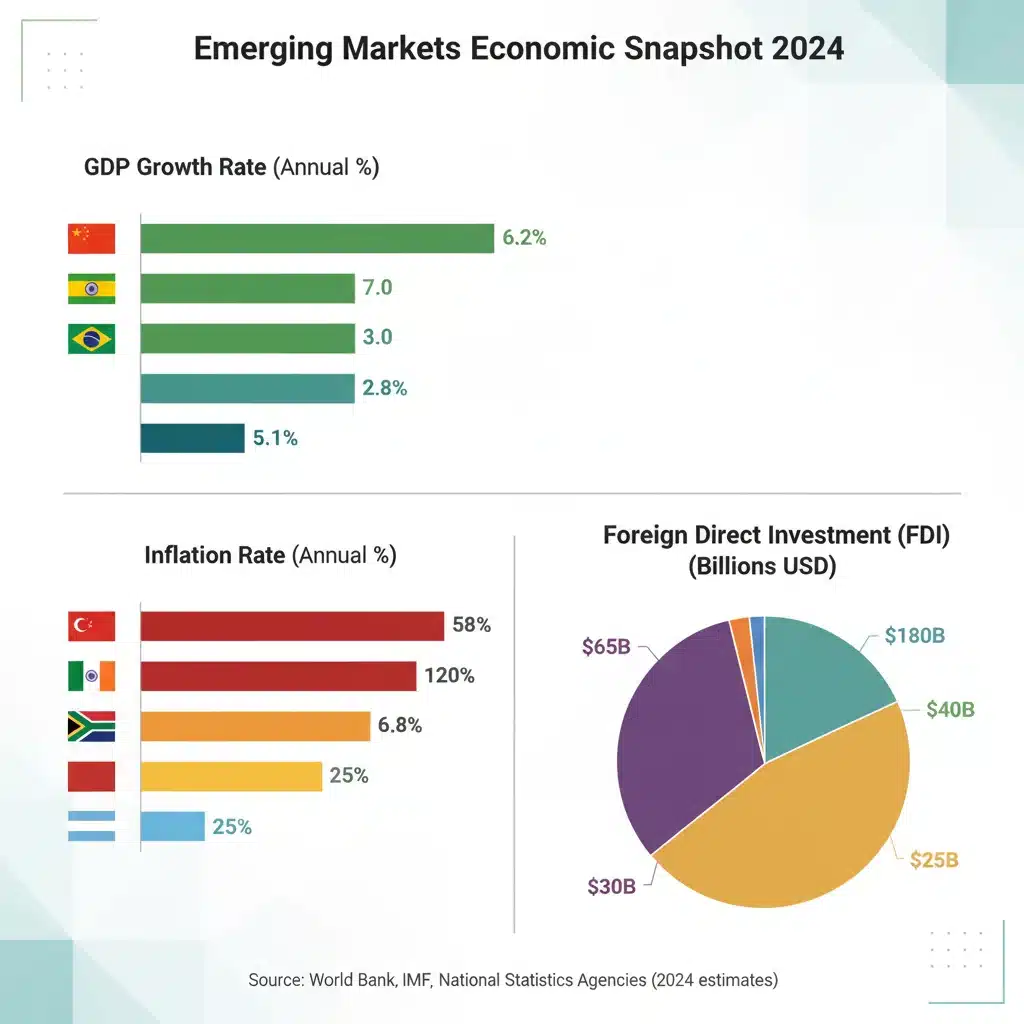
The Top 5 Emerging Market Funds for 2026 (Hypothetical Analysis)
While specific fund recommendations are subject to individual financial situations and market conditions, we can outline hypothetical profiles of emerging market funds that would fit our criteria for 2026. These profiles illustrate the characteristics and strategies that make a fund attractive.
Fund 1: Global Growth Catalyst Fund (GGCF)
- Strategy: GGCF focuses on identifying high-growth companies in technology and consumer discretionary sectors across a broad range of emerging economies, with a particular emphasis on digital transformation and rising middle-class consumption. It maintains a diversified portfolio but is overweight in countries demonstrating strong innovation ecosystems and supportive government policies.
- Rationale for 2026: The fund is well-positioned to benefit from the accelerating digital adoption and e-commerce boom in emerging markets. Its focus on innovative companies and a flexible geographic allocation allows it to adapt quickly to changing market dynamics.
- Key Performance Drivers: Strong earnings growth from portfolio companies, increasing consumer spending, and favorable regulatory environments for technology companies in key emerging markets.
Fund 2: Sustainable Emerging Markets Equity Fund (SEMEF)
- Strategy: SEMEF integrates Environmental, Social, and Governance (ESG) factors into its investment process, seeking companies with strong sustainability practices alongside robust financial performance. It invests in sectors like renewable energy, sustainable infrastructure, and healthcare, identifying long-term structural growth themes.
- Rationale for 2026: As global attention shifts towards sustainability, emerging markets are increasingly adopting green policies and technologies. SEMEF is positioned to capture this transition, investing in companies that are not only profitable but also contribute positively to their societies and the environment.
- Key Performance Drivers: Growing demand for sustainable solutions, increasing ESG awareness among investors, and government initiatives supporting green industries in emerging economies.
Fund 3: Asia Innovators Fund (AIF)
- Strategy: AIF has a concentrated focus on Asian emerging markets, specifically targeting companies at the forefront of innovation in areas such as artificial intelligence, biotechnology, and advanced manufacturing. The fund employs a bottom-up stock selection approach, identifying disruptors and market leaders.
- Rationale for 2026: Asia continues to be the engine of global growth, with countries like China, India, and South Korea leading in technological innovation. AIF’s specialized focus allows it to capitalize on regional strengths and deep market knowledge.
- Key Performance Drivers: Rapid technological advancements, strong government support for innovation, and a large, educated workforce driving R&D in Asian emerging economies.
Fund 4: Frontier Markets Opportunities Fund (FMOF)
- Strategy: FMOF invests in smaller, less developed emerging markets, often referred to as frontier markets. These markets offer higher growth potential but also higher risk. The fund seeks undervalued assets in sectors like telecommunications, financial services, and consumer staples, benefiting from early-stage development.
- Rationale for 2026: As mainstream emerging markets mature, frontier markets offer the next wave of growth. FMOF aims to capture the early stages of economic development and market liberalization in these regions, providing significant long-term upside.
- Key Performance Drivers: Economic reforms, infrastructure development, increasing foreign investment, and expanding consumer bases in frontier economies.
Fund 5: Diversified Emerging Debt Fund (DEDF)
- Strategy: DEDF focuses on fixed income securities issued by emerging market governments and corporations. It seeks attractive yields while managing credit and currency risks through active duration management and country selection. The fund invests across local currency and hard currency debt.
- Rationale for 2026: Emerging market debt can offer attractive yields compared to developed market debt, providing diversification benefits to an equity-heavy portfolio. As global interest rates stabilize, emerging market debt could see renewed interest.
- Key Performance Drivers: Stable macroeconomic conditions in issuing countries, improving credit ratings, and a search for yield by global investors.
Risks and Considerations for Investing in Emerging Market Funds
While the allure of high growth in emerging market funds is strong, it’s imperative for investors to be acutely aware of the associated risks. These are not investments for the faint of heart and often require a longer investment horizon and a higher tolerance for volatility. Understanding and preparing for these risks is as crucial as identifying potential growth opportunities.
One of the most significant risks is geopolitical instability. Emerging markets are often more susceptible to political upheavals, policy changes, and social unrest, which can directly impact market performance. A sudden change in government policy, for example, can lead to nationalization of industries or unexpected taxation, severely affecting corporate profitability and investor confidence. Investors in emerging market funds must stay informed about the political climate in the countries where their funds are invested.
Currency fluctuations represent another major risk. Many emerging market currencies are more volatile than those of developed nations. A strong U.S. dollar, for instance, can weaken emerging market currencies, making dollar-denominated debt more expensive for local companies and reducing the value of foreign investments when converted back to a home currency. Funds that invest in local currency debt or equities are particularly exposed to this risk.
Economic volatility and inflation are also prevalent. Emerging economies, while growing rapidly, can experience boom-and-bust cycles more frequently. High inflation can erode purchasing power and corporate profits, while sudden economic downturns can lead to significant market corrections. The less mature financial markets in these regions can also mean less liquidity, making it harder to buy or sell assets without impacting prices.
Furthermore, regulatory and governance risks are often higher. Regulatory frameworks in emerging markets may be less transparent or consistently enforced compared to developed markets. Corporate governance standards can also vary, potentially exposing investors to higher risks of fraud or mismanagement. Funds that conduct thorough due diligence on the companies they invest in, and prioritize those with strong governance, are better positioned to navigate these challenges.
Finally, liquidity risk can be a concern, especially in smaller or frontier markets. It might be challenging to buy or sell large blocks of shares without significantly affecting the market price, particularly during periods of stress. This can impact a fund’s ability to rebalance its portfolio efficiently or meet redemption requests.
To mitigate these risks, diversification across multiple emerging markets and sectors is key. Investing through well-managed emerging market funds, which employ professional managers with local expertise and robust risk management strategies, can also provide a layer of protection compared to direct individual stock picking.

The Role of Diversification in Emerging Market Investing
Diversification is a cornerstone of prudent investment strategy, and its importance is amplified when investing in emerging market funds. Given the inherent volatility and specific risks associated with these dynamic economies, a well-diversified portfolio can help mitigate potential downturns and enhance long-term returns. Diversification isn’t just about investing in multiple funds; it extends to spreading investments across various dimensions within the emerging market universe.
Firstly, geographic diversification is crucial. Relying too heavily on a single country or region, even a promising one, can expose an investor to concentrated political, economic, or currency risks. A robust emerging market fund will typically allocate investments across a wide array of countries, balancing exposure to large, established emerging economies like China and India with smaller, high-growth frontier markets. This strategy helps cushion the blow if one particular region experiences a setback.
Secondly, sector diversification is equally vital. Emerging markets are often characterized by dominant industries. For example, some might be heavily reliant on commodity exports, while others are driven by technology or manufacturing. A fund that spreads its investments across various sectors – from technology and consumer staples to financials and healthcare – can reduce the impact of sector-specific downturns. This ensures that the portfolio isn’t overly dependent on the fortunes of a single industry.
Thirdly, asset class diversification within emerging markets can also be beneficial. While our discussion primarily focuses on equity funds, many emerging market funds also invest in fixed income (debt) instruments. Emerging market debt, both local currency and hard currency, can offer attractive yields and often behaves differently from equities, providing a valuable diversification component. A balanced approach might include exposure to both emerging market equities and debt, depending on an investor’s risk profile and objectives.
Finally, diversification in investment style and manager approach can add another layer of resilience. Some funds might employ a growth-oriented strategy, focusing on companies with high earnings potential, while others might adopt a value approach, seeking undervalued assets. Combining funds with different investment philosophies can create a more robust portfolio that performs well under various market conditions. For example, during periods of market stress, value-oriented funds might offer more stability, while growth funds could outperform during economic expansions.
Ultimately, the goal of diversification in emerging market funds is to reduce overall portfolio risk without sacrificing potential returns. By carefully selecting funds that offer broad exposure across countries, sectors, and asset classes, investors can build a more resilient portfolio capable of navigating the dynamic and sometimes turbulent waters of emerging markets towards 2026 and beyond.
Conclusion: Navigating Emerging Markets for 2026 and Beyond
Investing in emerging market funds presents a captivating opportunity for long-term growth and portfolio diversification. As we look towards 2026, these dynamic economies are poised to continue their trajectory of development, driven by innovation, demographic shifts, and evolving global trade patterns. However, successful navigation of these markets demands a comprehensive understanding of their unique characteristics, including their potential for high returns alongside increased volatility and specific risks.
Our analysis has highlighted the critical factors influencing emerging market performance, such as global economic growth, commodity prices, developed market interest rates, and internal reforms. We’ve also outlined a rigorous methodology for identifying top-tier emerging market funds, emphasizing long-term performance, robust investment strategies, experienced management, and effective risk management. The hypothetical funds discussed illustrate the diverse approaches that can lead to success, from targeting technological innovators and sustainable enterprises to exploring frontier markets and diversifying into debt instruments.
Crucially, investors must remain vigilant regarding the inherent risks, including geopolitical instability, currency fluctuations, economic volatility, and regulatory challenges. The strategic application of diversification – across geographies, sectors, and asset classes – emerges as a powerful tool to mitigate these risks and build a more resilient investment portfolio. By choosing well-managed emerging market funds that align with their long-term financial goals and risk tolerance, investors can effectively tap into the immense potential these markets offer.
As the global economic landscape continues to shift, emerging market funds will undoubtedly remain a focal point for investors seeking compelling growth opportunities. Continuous research, a disciplined investment approach, and a clear understanding of both the rewards and risks will be key to unlocking the full potential of these vibrant economies in 2026 and the years that follow. Engage with financial advisors to tailor these insights to your specific investment strategy and ensure your portfolio is optimally positioned for future success.