Medicare Part B Premium Forecast 2026: Anticipating Changes and Planning for Cost Increases

Anúncios
Medicare Part B Premium Forecast 2026: Anticipating Changes and Planning for Potential Cost Increases
Understanding and preparing for the future of your healthcare costs is paramount, especially when it comes to essential programs like Medicare. For millions of Americans, Medicare Part B premiums represent a significant recurring expense that directly impacts their monthly budget. As we look ahead, anticipating the Medicare Part B Premium forecast for 2026 becomes a critical exercise in financial planning. This comprehensive guide will delve into the factors that influence these premiums, offer insights into potential changes, and provide actionable strategies to help you plan effectively for any forthcoming cost increases.
Anúncios
The Foundation of Medicare Part B: What It Covers and How Premiums Are Determined
Before we dive into the Medicare Part B Premium forecast for 2026, it’s essential to understand what Medicare Part B entails. Medicare Part B covers medically necessary services and supplies, including doctor’s visits, outpatient care, preventive services, and some medical equipment. Unlike Part A (hospital insurance), which is often premium-free for most beneficiaries, Part B typically requires a monthly premium. This premium is usually deducted directly from Social Security, Railroad Retirement Board, or Office of Personnel Management benefit payments.
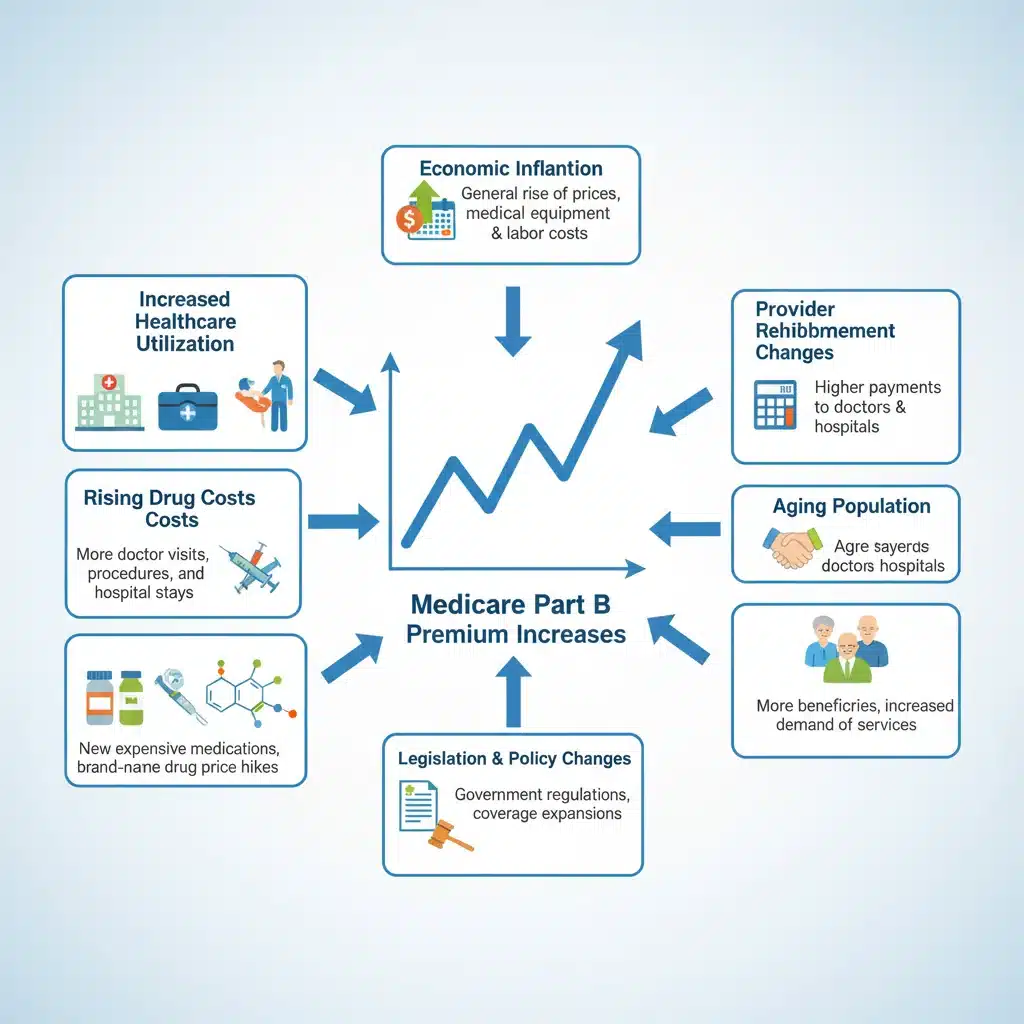
Several key factors determine the standard Medicare Part B Premium each year. The Centers for Medicare & Medicaid Services (CMS) is responsible for setting these amounts, and their decisions are influenced by a complex interplay of economic, demographic, and healthcare-specific variables. These include the overall cost of healthcare services, the utilization of those services by beneficiaries, the financial health of the Medicare trust funds, and legislative changes.
A significant aspect of premium determination is the ‘hold harmless’ provision, which protects about two-thirds of Medicare beneficiaries from premium increases if their Social Security cost-of-living adjustment (COLA) is not large enough to cover the premium hike. However, this protection does not apply to all beneficiaries, particularly those new to Medicare, those who do not receive Social Security benefits, or those with higher incomes subject to the Income-Related Monthly Adjustment Amount (IRMAA).
Anúncios
Analyzing Historical Trends: A Glimpse into Past Medicare Part B Premium Increases
To better predict the Medicare Part B Premium for 2026, it’s helpful to examine historical trends. Over the past decade, Medicare Part B premiums have seen consistent, albeit sometimes volatile, increases. These increases are often driven by a combination of rising healthcare costs, new medical technologies, and the increasing demand for services from an aging population. For instance, significant jumps have occurred in years following substantial increases in prescription drug costs or higher-than-expected utilization of physician services.
For example, in some years, a large increase in the premium was necessary to replenish the Medicare trust fund or to account for unforeseen expenditures. In other years, the ‘hold harmless’ provision’s impact on a large segment of beneficiaries meant that a smaller portion of beneficiaries bore a larger share of the cost increase. Understanding these historical patterns provides a crucial context for what might unfold in 2026. The trajectory of healthcare spending, particularly in areas like specialty drugs and advanced diagnostics, plays a pivotal role in shaping future premiums.
Another factor to consider is the broader economic environment. Inflationary pressures can indirectly impact healthcare costs, which in turn can influence premium adjustments. The growth rate of the economy, wage growth, and the overall health of the federal budget also contribute to the complex equation that determines the annual Medicare Part B Premium.
Key Factors Influencing the Medicare Part B Premium Forecast for 2026
Forecasting the Medicare Part B Premium for 2026 requires a deep dive into several critical variables. While no one can predict the exact figure with absolute certainty, we can identify the primary drivers that CMS will consider:
1. Healthcare Spending and Utilization Rates
The most direct influence on premiums is the overall cost of healthcare services covered by Part B. This includes physician fees, outpatient hospital services, laboratory tests, durable medical equipment, and certain home health services. If the utilization of these services increases, or if the cost per service rises, it puts upward pressure on premiums. Factors like the prevalence of chronic diseases, advancements in medical treatments, and changes in patient demographics all contribute to healthcare spending trends.
2. Prescription Drug Costs
While Part D covers most prescription drugs, some medications administered in a doctor’s office or outpatient setting fall under Part B. The rising cost of specialty drugs and biologics has been a significant contributor to overall healthcare expenditure. Any substantial increases in these drug costs will likely translate into higher Medicare Part B Premium amounts.
3. Economic Factors and Inflation
Broader economic conditions, including inflation, wage growth, and the cost of living adjustments (COLA) for Social Security, play a crucial role. If inflation remains high, the cost of providing healthcare services also increases, which could necessitate a higher premium. The Social Security COLA is particularly important because it affects the ‘hold harmless’ provision, determining how many beneficiaries are shielded from premium hikes.
4. Legislative and Policy Changes
Government policies and legislative actions can directly impact Medicare premiums. New laws related to drug pricing, healthcare provider reimbursement, or changes to Medicare’s funding structure could significantly alter the Medicare Part B Premium. Policymakers are continually evaluating ways to ensure the solvency and sustainability of the Medicare program, and these discussions can lead to adjustments in premiums.
5. Trust Fund Status
The Medicare trust funds, specifically the Supplementary Medical Insurance (SMI) Trust Fund which primarily funds Part B, are continually monitored. If the fund’s financial health deteriorates, CMS may need to increase premiums to ensure its solvency and ability to pay for services. Actuarial projections of the trust fund’s status are a key input in the premium-setting process.
Anticipating the Medicare Part B Premium Forecast for 2026: What to Expect
Based on the influencing factors discussed, it is reasonable to anticipate a continued upward trend for the Medicare Part B Premium in 2026. While the exact percentage increase is impossible to pinpoint this far out, several indicators suggest that beneficiaries should prepare for potential cost increases.
Firstly, healthcare spending in the U.S. has historically outpaced general inflation, and there’s no strong indication this trend will reverse dramatically by 2026. The aging population continues to grow, leading to increased demand for medical services. Secondly, ongoing innovation in medical technology and pharmaceuticals, while beneficial for health outcomes, often comes with a higher price tag. New treatments and diagnostic tools, particularly in specialized areas, can contribute to elevated costs under Part B.
Furthermore, the long-term solvency concerns for Medicare’s trust funds may prompt CMS to take proactive measures, including premium adjustments, to ensure the program’s financial stability. While political considerations and economic conditions can introduce volatility, the underlying pressures on healthcare costs remain robust.
Beneficiaries should mentally prepare for an increase that is likely at least in line with, if not slightly above, the general rate of inflation. Those who are not protected by the ‘hold harmless’ provision, especially higher-income earners subject to IRMAA, could experience more significant percentage increases in their Medicare Part B Premium.
Planning for Potential Cost Increases: Strategies for Beneficiaries
Proactive financial planning is crucial to mitigate the impact of potential Medicare Part B Premium increases in 2026. Here are several strategies beneficiaries can employ:
1. Budgeting and Financial Review
Regularly review your household budget to understand how a premium increase might affect your monthly expenses. Consider setting aside funds specifically for healthcare costs. If you’re approaching Medicare eligibility, factor these potential premiums into your retirement planning. A thorough financial review can help identify areas where you might adjust spending to accommodate higher healthcare costs.
2. Understanding IRMAA and Income Planning
For higher-income beneficiaries, the Income-Related Monthly Adjustment Amount (IRMAA) means paying a higher Medicare Part B Premium. IRMAA is based on your modified adjusted gross income (MAGI) from two years prior. Therefore, your 2026 premiums will be based on your 2024 income. Strategic income planning, such as managing capital gains, converting traditional IRA funds to Roth IRAs in lower-income years, or utilizing Qualified Charitable Distributions (QCDs) if eligible, can potentially help reduce your MAGI and, consequently, your IRMAA surcharges.
3. Exploring Medicare Advantage (Part C) Plans
Medicare Advantage plans, offered by private insurance companies approved by Medicare, must cover everything Original Medicare (Parts A and B) covers. Many Medicare Advantage plans offer additional benefits and often have different premium structures. Some plans may even offer a Part B premium reduction or rebate. While you still pay your Part B premium to Medicare, the overall cost structure might be more predictable or even lower in some cases, depending on the plan and your healthcare needs. It’s essential to compare plans carefully during the Annual Enrollment Period.
4. Considering Medigap (Medicare Supplement) Plans
Medigap policies help cover some of the out-of-pocket costs of Original Medicare, such as deductibles, copayments, and coinsurance. While Medigap plans do not cover the Part B premium itself, they can significantly reduce your overall healthcare spending by covering costs that Medicare doesn’t. This can provide a more predictable total healthcare budget, even if your Medicare Part B Premium increases. Evaluate different Medigap plans to find one that aligns with your anticipated healthcare utilization and budget.
5. Utilizing Preventive Services
Medicare Part B covers a wide range of preventive services, often at no cost to you. Taking advantage of these screenings and wellness visits can help detect health issues early, potentially preventing more costly treatments down the line. Maintaining good health through regular check-ups, a balanced diet, and exercise is one of the best ways to manage overall healthcare expenditures.
6. Seeking Financial Assistance Programs
For beneficiaries with limited income and resources, state and federal programs can help with Medicare costs. Medicare Savings Programs (MSPs) can assist with Part B premiums, deductibles, and coinsurance. Medicaid can also provide comprehensive healthcare coverage for low-income individuals. Investigate your eligibility for these programs, as they can offer substantial financial relief.

The Role of Advocacy and Information
Staying informed about potential changes to the Medicare Part B Premium is a continuous process. CMS typically announces the upcoming year’s premiums in the fall, usually around October or November. Pay close attention to these announcements and any related news from government agencies or reputable financial news outlets.
Additionally, beneficiary advocacy groups and senior organizations often provide valuable insights and resources regarding Medicare changes. Engaging with these resources can help you understand the implications of premium adjustments and identify strategies tailored to your specific situation. Don’t hesitate to consult with a qualified financial advisor or a Medicare counselor (through your State Health Insurance Assistance Program – SHIP) for personalized guidance.