
In the ever-evolving landscape of higher education, securing robust funding is paramount for institutions to thrive, innovate, and continue providing exceptional learning experiences. As we look towards 2026, the U.S. federal government remains a critical source of support, offering numerous grant programs designed to address a wide array of needs, from groundbreaking research to student access and institutional capacity building. Navigating these opportunities, however, requires foresight, strategic planning, and a deep understanding of the application process. This comprehensive guide will delve into the top three most impactful Federal Higher Ed Grants poised to make a significant difference for U.S. higher education institutions in 2026, offering insights into their objectives, eligibility criteria, and best practices for securing these vital funds.
Anúncios
The competition for federal funding is intense, and institutions that proactively identify and strategically pursue relevant Federal Higher Ed Grants stand the best chance of success. This article aims to equip university administrators, grant writers, and faculty with the knowledge necessary to unlock their institution’s potential and secure the resources needed to achieve their strategic goals in the coming years. We will explore not just what these grants are, but also how to best position your institution for a successful application, ensuring that your proposals resonate with the priorities of federal agencies.
Understanding the Landscape of Federal Higher Ed Grants
Before diving into specific programs, it’s crucial to grasp the broader context of federal funding for higher education. These grants typically fall into several categories: research and development, student aid and access, institutional development, and specialized programs targeting specific fields or populations. Each category serves a unique purpose and is administered by different federal agencies, including the Department of Education (DoE), the National Science Foundation (NSF), the National Institutes of Health (NIH), and others. For 2026, the emphasis continues to be on fostering innovation, promoting equity, and addressing national priorities such as STEM education, climate change research, and workforce development.
Anúncios
Institutions seeking Federal Higher Ed Grants must align their projects with the stated objectives of the funding agency and the specific program. This requires meticulous research into current federal priorities, reviewing past funding cycles, and understanding the evolving needs of the national educational and research landscape. Successful grant seekers often engage in pre-application discussions with program officers, attend informational webinars, and leverage networking opportunities to gain deeper insights into agency expectations. This proactive engagement can significantly enhance the quality and relevance of a grant proposal, making it stand out in a competitive pool.
Key Trends Influencing Federal Funding in 2026
Several overarching trends are expected to shape the availability and focus of Federal Higher Ed Grants in 2026:
- Increased Focus on Equity and Access: Programs designed to support minority-serving institutions (MSIs), historically Black colleges and universities (HBCUs), and institutions serving low-income students are likely to receive sustained or increased attention.
- STEM and Workforce Development: Investment in science, technology, engineering, and mathematics (STEM) education and research, particularly in emerging fields like AI, cybersecurity, and biotechnology, will remain a high priority to bolster the U.S. workforce and global competitiveness.
- Climate Change and Sustainability Research: Funding for research addressing climate change, renewable energy, and environmental sustainability is anticipated to grow as federal agencies prioritize solutions to pressing global challenges.
- Digital Transformation in Education: Grants supporting the integration of technology in teaching and learning, online education infrastructure, and digital literacy initiatives will be crucial as institutions adapt to evolving pedagogical models.
- Interdisciplinary Collaboration: Agencies are increasingly favoring proposals that demonstrate collaboration across disciplines, institutions, and even public-private partnerships, recognizing that complex problems require multifaceted solutions.
Understanding these trends is vital for institutions as they develop their grant-seeking strategies, ensuring their proposals are not only innovative but also align with national strategic objectives for Federal Higher Ed Grants.
Top 3 Federal Grant Programs for U.S. Higher Education in 2026
Based on current trends, historical funding patterns, and projected national priorities, the following three federal grant programs are anticipated to be among the most significant for U.S. higher education institutions in 2026. While specific details and funding levels may vary, their core objectives and impact remain consistently high.
1. National Science Foundation (NSF) Research and Education Grants
The National Science Foundation (NSF) is a cornerstone of federal funding for basic research and education in non-medical fields of science and engineering. For 2026, NSF grants will continue to be a prime target for universities seeking to advance scientific discovery, foster innovation, and train the next generation of researchers. The NSF’s portfolio is vast, but key programs likely to offer substantial opportunities include:
- Major Research Instrumentation (MRI) Program: Supports the acquisition or development of shared research instrumentation that is available to multiple users within an institution and/or to other institutions. This is critical for maintaining cutting-edge research infrastructure.
- Faculty Early Career Development (CAREER) Program: A foundation-wide activity that offers the NSF’s most prestigious awards in support of early-career faculty who have the potential to serve as academic role models in research and education and to lead advances in the mission of their department or organization.
- Research Experiences for Undergraduates (REU) Sites and Supplements: Provides opportunities for undergraduate students to engage in meaningful research experiences, often at institutions other than their own. This program is vital for developing the STEM pipeline.
- Convergent Research Programs: NSF is increasingly emphasizing convergent research, which involves synthesizing knowledge, methods, and expertise from different disciplines to solve complex problems. Institutions with interdisciplinary research centers or proposals that bridge traditional academic silos will find strong alignment here.
Eligibility and Application Insights: Eligibility for NSF grants is broad, generally open to U.S. academic institutions and non-profit organizations. Proposals are evaluated based on two core criteria: intellectual merit and broader impacts. Institutions must clearly articulate the potential for their proposed research to advance knowledge and benefit society. Success often hinges on a well-defined research plan, strong preliminary data, a compelling broader impacts statement, and a demonstrated capacity to execute the project. Partnerships with industry, government labs, or other academic institutions can also strengthen proposals, particularly for larger-scale initiatives.

For institutions focused on STEM fields and basic scientific inquiry, NSF grants represent an unparalleled opportunity to secure significant funding for research, infrastructure, and talent development. Staying abreast of specific program solicitations and directorate priorities will be key to maximizing success in 2026.
2. Department of Education (DoE) Higher Education Programs
The U.S. Department of Education (DoE) is the primary federal agency responsible for establishing policy for, administering, and coordinating most federal assistance to education. Its higher education programs are crucial for supporting student access, institutional capacity, and innovative educational practices. For 2026, several DoE programs will continue to be highly relevant for a diverse range of institutions:
- Title III and Title V Programs (Institutional Aid): These programs are designed to strengthen the academic, administrative, and fiscal capabilities of eligible institutions.
- Title III – Strengthening Institutions Program (SIP): Supports institutions of higher education that serve a high percentage of low-income students and have low educational and general expenditures per student. Funds can be used for faculty development, curriculum revision, student support services, and more.
- Title V – Developing Hispanic-Serving Institutions (HSI) Program: Specifically targets institutions where Hispanic students constitute at least 25% of the total enrollment, providing funds to expand and enhance their academic programs and services.
- Student Support Services (SSS) Program (TRIO Programs): Part of the larger TRIO suite, SSS helps low-income, first-generation college students and students with disabilities to successfully complete a postsecondary education. Institutions receive grants to provide academic tutoring, advising, career counseling, and other support services.
- Fund for the Improvement of Postsecondary Education (FIPSE): FIPSE often funds innovative, reform-oriented projects that improve access, quality, and effectiveness in postsecondary education. While its scope can vary year-to-year, it’s a critical source for pilot programs and scalable educational innovations.
Eligibility and Application Insights: DoE grants often have specific institutional eligibility requirements related to student demographics (e.g., percentage of Pell Grant recipients, minority enrollment) or institutional type. Proposals are typically evaluated on the significance of the problem addressed, the quality of the project design, the institutional capacity to implement the project, and the potential for sustainability and impact. A strong application will demonstrate a clear understanding of the target population’s needs, evidence-based strategies, and a robust evaluation plan to measure outcomes. Collaboration with community organizations or K-12 schools can also be beneficial, particularly for programs focused on student pathways and support services.
For institutions dedicated to enhancing student success, promoting equity, and strengthening their overall operational and academic capabilities, DoE Federal Higher Ed Grants are indispensable. These programs directly contribute to creating a more inclusive and effective higher education system.
3. National Institutes of Health (NIH) Research Grants (e.g., R01, R21)
The National Institutes of Health (NIH) is the largest source of biomedical research funding in the world. For higher education institutions with strong health sciences, medical, and biotechnology programs, NIH grants are essential for conducting cutting-edge research, training scientists, and improving public health outcomes. While NIH offers a vast array of grant mechanisms, the R01 and R21 grants are foundational:
- R01 Research Project Grant: The most common grant mechanism, providing support for health-related research and development based on the mission of the NIH. These are investigator-initiated grants for specific research projects, typically 3-5 years in duration, requiring significant preliminary data and a well-developed research plan.
- R21 Exploratory/Developmental Research Grant: Supports exploratory and developmental research projects by providing an opportunity for new research directions or new investigators to test innovative ideas. These grants are generally shorter (up to 2 years) and have smaller budgets than R01s, often serving as a stepping stone to larger projects.
- Training Grants (e.g., T32): Supports institutional training programs to help prepare individuals for careers in biomedical, behavioral, and clinical research. These are crucial for departments looking to build their research capacity and mentor future scientists.
- Program Project/Center Grants (e.g., P01, P30): Supports multi-project research efforts that are often interdisciplinary and focused on a common theme, or provides resources for a research center. These are highly competitive and require significant institutional infrastructure.
Eligibility and Application Insights: Eligibility for NIH grants is generally open to U.S. and foreign institutions, including universities, hospitals, and non-profit organizations. Proposals are rigorously peer-reviewed based on criteria such as significance, investigator(s), innovation, approach, and environment. Successful NIH applications require a strong scientific premise, meticulous experimental design, a clear justification for the proposed budget, and a demonstrated capability of the research team. Building strong collaborative networks, publishing in high-impact journals, and actively participating in scientific conferences are all critical for establishing the credibility needed for NIH funding.
For institutions at the forefront of health and biomedical research, NIH Federal Higher Ed Grants are the lifeblood of discovery. These grants not only fund essential scientific inquiry but also contribute significantly to the training of medical professionals and scientists, addressing critical public health challenges.
Strategies for Maximizing Your Institution’s Grant Success
Securing Federal Higher Ed Grants is a complex endeavor that requires more than just a good idea. It demands a strategic, institution-wide approach. Here are key strategies to enhance your institution’s chances of success in 2026 and beyond:
1. Develop a Centralized Grant Support Infrastructure
Many successful institutions have a robust Office of Sponsored Programs or Research Services that provides comprehensive support to faculty and staff. This includes:
- Grant Identification and Dissemination: Proactively identifying relevant funding opportunities and disseminating them to appropriate faculty and departments.
- Proposal Development Assistance: Offering services such as grant writing workshops, proposal review, budget development, and compliance checks.
- Pre-Award and Post-Award Management: Assisting with submission logistics, contract negotiation, and post-award financial and regulatory compliance.
- Faculty Training and Mentorship: Providing training for new faculty on grant writing, fostering mentorship opportunities with experienced grant recipients, and creating internal seed funding programs.
A strong support system reduces the administrative burden on researchers, allowing them to focus more on the scientific or educational merit of their proposals.
2. Foster Interdisciplinary Collaboration and Partnerships
As noted, many federal agencies are increasingly prioritizing interdisciplinary and collaborative projects. Institutions should actively encourage:
- Cross-Departmental Research Teams: Facilitating connections between faculty from different disciplines to tackle complex problems that require diverse perspectives.
- External Partnerships: Collaborating with other universities, community colleges, K-12 schools, non-profit organizations, industry partners, and government agencies. These partnerships can strengthen proposals by demonstrating broader impact, leveraging diverse expertise, and extending the reach of the project.
- Consortia and Networks: Participating in or forming consortia focused on specific research areas or educational challenges, which can lead to larger, multi-institution grant opportunities.
These collaborations not only enhance the quality of proposals but also build institutional capacity and foster a culture of shared innovation.
3. Emphasize Data-Driven Decision Making and Impact Measurement
Federal agencies are increasingly focused on outcomes and accountability. Institutions must be able to:
- Collect and Analyze Relevant Data: Understand their student demographics, academic outcomes, research productivity, and community impact to identify areas of need and demonstrate institutional strengths.
- Develop Strong Evaluation Plans: Include rigorous evaluation methodologies in grant proposals to measure the effectiveness of proposed activities and the achievement of project objectives. This includes clearly defined metrics, baseline data, and targets for success.
- Showcase Past Successes: Maintain a record of successful projects, their outcomes, and their impact. This evidence can be powerfully leveraged in future grant applications to demonstrate institutional effectiveness and capacity.
A commitment to data-driven approaches not only strengthens grant proposals but also fosters continuous improvement within the institution.
4. Stay Informed and Adapt to Evolving Priorities
The federal funding landscape is dynamic. Institutions must make a concerted effort to:
- Monitor Federal Agency Websites: Regularly check agency grant forecasts, program solicitations, and strategic plans (e.g., NSF’s Big Ideas, NIH’s Strategic Plans) for emerging priorities and funding opportunities.
- Engage with Program Officers: Building relationships with program officers at federal agencies can provide invaluable insights into their priorities, preferred approaches, and common pitfalls in proposals.
- Attend Grant Workshops and Conferences: Participate in events hosted by federal agencies or professional organizations to learn about new programs, network with peers, and gain practical advice.
- Review Funded Projects: Studying abstracts and reports from previously funded projects can offer insights into successful approaches and the types of projects agencies are interested in supporting.
Agility and responsiveness to changes in federal priorities are critical for sustained grant success. Institutions that can quickly pivot and align their initiatives with new funding opportunities will have a distinct advantage.
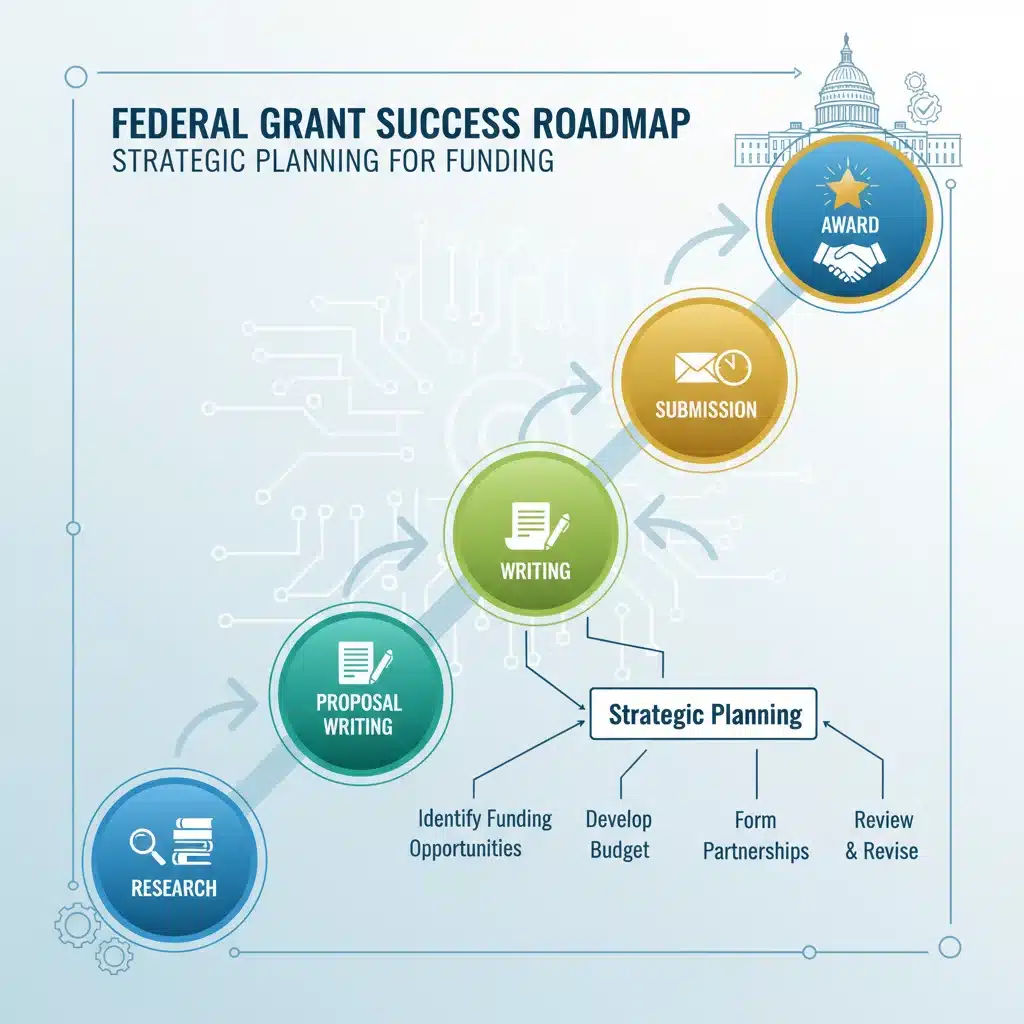
5. Invest in Grant Writing Expertise and Professional Development
Grant writing is a specialized skill. Institutions should consider:
- Hiring Experienced Grant Writers: Bringing in professionals with a proven track record of securing federal funding can significantly improve proposal quality and success rates.
- Providing Professional Development: Offering workshops, seminars, and access to resources for faculty and staff to hone their grant writing skills, understand federal regulations, and master proposal development techniques.
- Utilizing External Consultants: For particularly large or complex grants, engaging external grant consultants or proposal development firms can provide specialized expertise and an objective review.
Investing in the human capital involved in grant seeking is an investment in the institution’s future funding stability.
The Future of Federal Funding for Higher Education
As we move closer to 2026 and beyond, the role of Federal Higher Ed Grants will remain central to the health and vitality of U.S. higher education. The challenges facing society—from climate change and public health crises to economic competitiveness and social equity—increasingly rely on the research, innovation, and talent developed within universities. Federal funding agencies recognize this crucial role and will likely continue to prioritize investments that yield significant societal benefits.
Institutions that are proactive, strategic, and adaptable in their pursuit of federal grants will be best positioned to secure the resources needed to achieve their missions. This involves not only identifying the right funding opportunities but also building internal capacity, fostering collaboration, and demonstrating a clear commitment to impact and accountability. By embracing these strategies, U.S. higher education institutions can continue to be engines of discovery, innovation, and opportunity for all, supported by the vital lifeline of federal funding.
Conclusion
The pursuit of Federal Higher Ed Grants is an ongoing, dynamic process that requires dedication, expertise, and a strategic vision. As we’ve explored, programs from the NSF, DoE, and NIH represent some of the most significant opportunities for U.S. higher education institutions in 2026. By understanding the objectives of these key programs, aligning institutional strengths with federal priorities, and implementing robust grant-seeking strategies, universities can significantly enhance their chances of securing critical funding.
From advancing groundbreaking scientific research to fostering student success and strengthening institutional capacity, federal grants are indispensable for driving progress in higher education. Institutions that invest in their grant support infrastructure, promote interdisciplinary collaboration, emphasize data-driven outcomes, and continuously adapt to the evolving funding landscape will be the ones that thrive. The journey to securing these funds is challenging, but the rewards—in terms of research breakthroughs, student opportunities, and societal impact—are immeasurable. By focusing on these top federal grant programs and employing the strategies outlined, U.S. higher education institutions are well-equipped to unlock their full potential and continue their vital contributions to the nation and the world.