Data Privacy Regulations: Legislative Insight for Mid-2025
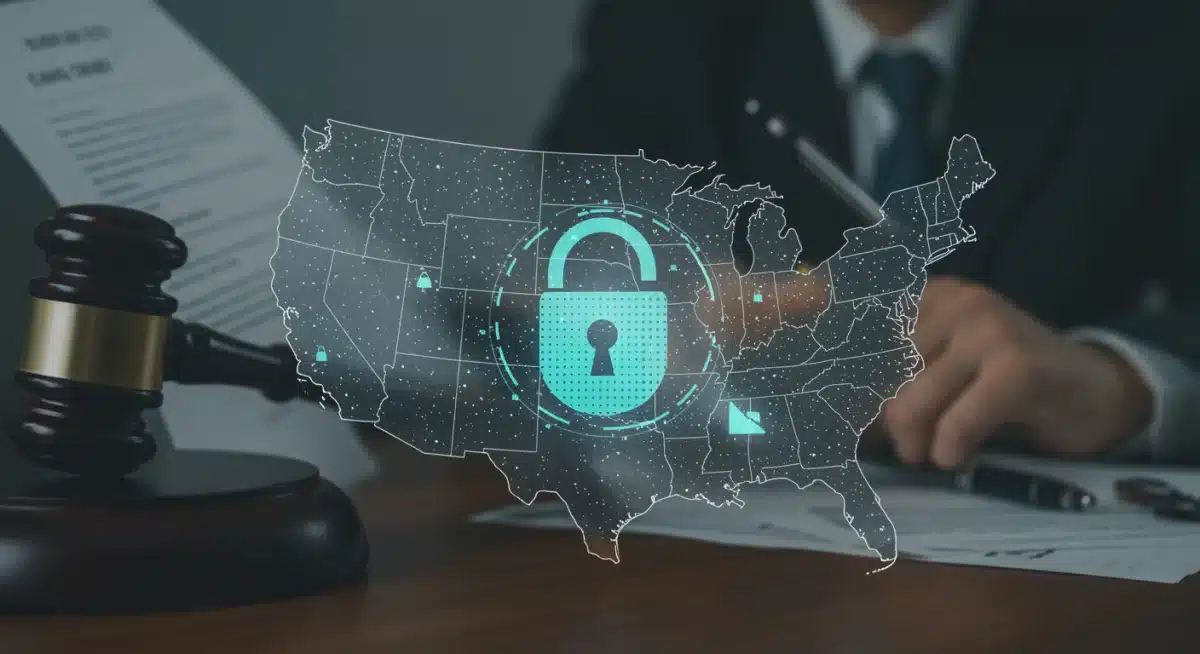
New legislative insight indicates major data privacy regulations are expected to pass by mid-2025, poised to significantly reshape data handling practices and consumer rights across the United States.
The landscape of digital personal information is constantly evolving, and keeping pace with legal developments is crucial. This article delves into the latest data privacy regulations expected to pass by mid-2025, offering a vital legislative insight into what businesses and consumers in the United States can anticipate.
Understanding the Current US Data Privacy Landscape
The United States currently operates under a patchwork of sector-specific and state-level data privacy laws, a stark contrast to the comprehensive federal approach seen in other regions. This fragmented system often creates complexity for businesses and varying degrees of protection for consumers depending on where they reside or where a company operates.
Navigating this intricate web of regulations requires a deep understanding of laws like the California Consumer Privacy Act (CCPA) and its successor, the California Privacy Rights Act (CPRA), which have set precedents for other states. Beyond California, states such as Virginia, Colorado, Utah, and Connecticut have also enacted their own privacy statutes, each with unique requirements and compliance obligations.
State-Level Privacy Laws: A Brief Overview
Many states have taken the initiative to establish their own data privacy frameworks, often mirroring some aspects of the GDPR but tailored to their specific economic and social contexts. These laws typically grant consumers rights over their personal data, including the right to know what data is collected, to delete it, and to opt out of its sale.
- California Consumer Privacy Act (CCPA/CPRA): Grants extensive rights to California residents, including access, deletion, and opt-out rights, with broad definitions of personal information and data sale.
- Virginia Consumer Data Protection Act (VCDPA): Focuses on consumer rights related to personal data, requiring clear consent for processing sensitive data and offering opt-out options.
- Colorado Privacy Act (CPA): Similar to CCPA and VCDPA, it provides consumers with rights to access, correct, delete, and opt out of the sale of their personal data.
The lack of a unified federal standard often leads to a complex compliance environment for businesses operating across state lines. Companies must meticulously track and adhere to multiple, sometimes conflicting, regulations, which can be resource-intensive and challenging.
The current state of data privacy in the US underscores the pressing need for a more harmonized approach. While state laws have provided valuable protections, their inconsistencies highlight the inefficiencies and potential gaps in consumer safeguarding across the nation.
Driving Forces Behind New Federal Legislation
The momentum for new federal data privacy legislation is building, fueled by a confluence of factors including public demand, technological advancements, and the growing economic importance of data. Consumers are increasingly aware of their digital footprints and are demanding greater control over their personal information, pushing policymakers to act.
Technological innovations, particularly in artificial intelligence and big data analytics, have amplified concerns about how personal data is collected, processed, and used. These advancements, while offering immense benefits, also pose new risks to individual privacy, making existing laws feel outdated and insufficient.
Public Opinion and Consumer Advocacy
Surveys consistently show strong public support for more robust data privacy protections. High-profile data breaches and revelations about data misuse have eroded public trust in corporations and government agencies, galvanizing consumer advocacy groups to lobby for stronger laws. These groups play a critical role in shaping the legislative agenda by raising awareness and providing expert input.
The collective voice of consumers, amplified by advocacy organizations, creates significant pressure on lawmakers to prioritize privacy legislation. This public sentiment is a powerful catalyst for change, demonstrating that data privacy is no longer a niche concern but a mainstream issue with broad societal implications.
Key Provisions Expected in Upcoming Regulations
While specific details are still being debated, several key themes and provisions are likely to feature prominently in new federal data privacy regulations. These anticipated measures aim to create a more uniform and comprehensive framework, addressing gaps in current laws and enhancing consumer protections nationwide.
One of the most significant anticipated changes is the establishment of a national standard for data protection, which would streamline compliance for businesses and ensure consistent rights for all US consumers. This would move away from the current state-by-state approach, offering greater clarity and predictability.
Consumer Rights and Data Control
New legislation is expected to expand and standardize consumer rights regarding their personal data. This includes rights similar to those found in the CCPA and GDPR, such as the right to access, correct, delete, and port data. There will likely be clearer mechanisms for consumers to exercise these rights and for businesses to respond to such requests.
- Right to Access: Consumers will likely have the right to request and obtain a copy of their personal data held by companies.
- Right to Deletion: The ability for consumers to request the erasure of their personal data under certain conditions.
- Right to Opt-Out: Enhanced rights to opt-out of the sale or sharing of personal data, particularly for targeted advertising.
Another crucial element will be increased transparency requirements. Companies will likely need to provide clearer and more understandable privacy notices, detailing what data they collect, why they collect it, how it is used, and with whom it is shared. This aims to empower consumers to make more informed decisions about their data.
Furthermore, stricter rules around data minimization and purpose limitation are anticipated. This means companies would be encouraged to collect only the data necessary for a specific purpose and to use it only for that purpose, reducing the risk of misuse and over-collection. These provisions collectively aim to shift the balance of power, giving individuals greater agency over their digital information.
Impact on Businesses: Compliance and Innovation
The introduction of new federal data privacy regulations will undoubtedly have a profound impact on businesses operating within the United States. While compliance may present initial challenges, it also offers opportunities for innovation and building greater trust with consumers. Businesses will need to conduct thorough audits of their data processing activities to ensure alignment with the new legal requirements.
Companies will be compelled to re-evaluate their data collection, storage, and usage practices, potentially requiring significant adjustments to their internal policies and technological infrastructure. This proactive approach to compliance can mitigate legal risks and enhance brand reputation.
Operational Changes and Investment
Businesses, particularly those heavily reliant on data, will likely need to invest in new technologies and processes to meet the demands of stricter privacy laws. This could include implementing advanced data encryption, developing sophisticated consent management platforms, and training staff on new compliance protocols.
The financial implications for businesses, especially small and medium-sized enterprises (SMEs), could be substantial. However, early adoption of privacy-by-design principles can help integrate compliance into core operations, making it a more sustainable and less disruptive process in the long run. Investing in robust privacy programs can also differentiate businesses in a competitive market.
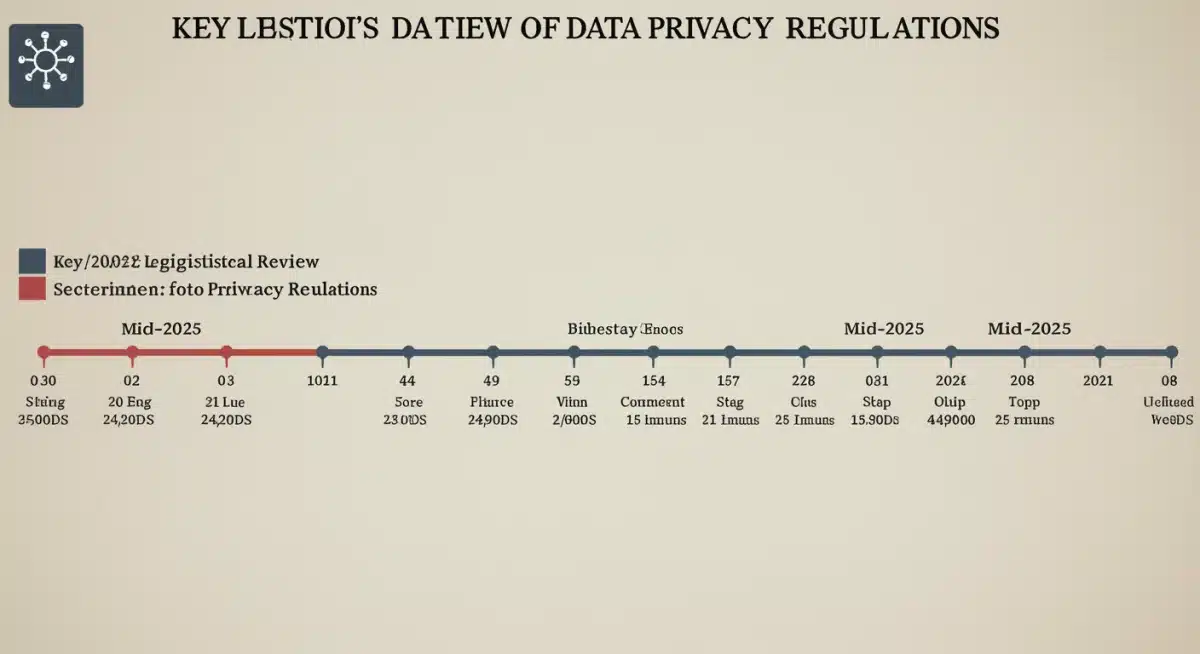
Beyond operational adjustments, new regulations could spur innovation in privacy-enhancing technologies. Companies that embrace these technologies not only comply with the law but also demonstrate a commitment to consumer privacy, which can be a significant competitive advantage. The focus will shift from mere compliance to embedding privacy as a core business value.
Ultimately, while the initial phase of adapting to new regulations may be demanding, it will foster a more transparent and trustworthy digital ecosystem. Businesses that proactively embrace these changes will be better positioned to thrive in an increasingly privacy-conscious world, building stronger relationships with their customers based on mutual trust and respect.
Enforcement and Penalties for Non-Compliance
Effective enforcement mechanisms are crucial for the success of any data privacy legislation. Upcoming federal data privacy regulations are expected to include robust enforcement provisions, outlining which agencies will be responsible for overseeing compliance and the types of penalties that can be levied against organizations that fail to adhere to the law. This ensures that the regulations have real teeth and act as a deterrent against non-compliance.
The specific enforcement body could be a new federal agency, an expanded role for an existing one like the Federal Trade Commission (FTC), or a combination of federal and state authorities. Clear jurisdictional lines and collaboration between agencies will be vital for consistent application of the law.
Potential Sanctions and Legal Actions
Non-compliance with new privacy regulations could result in significant financial penalties, which are often structured as a percentage of a company’s global annual revenue or a fixed monetary fine per violation. These penalties are designed to be substantial enough to incentivize compliance and deter negligence.
- Monetary Fines: Expect substantial fines, potentially reaching millions of dollars, depending on the severity and scale of the violation.
- Reputational Damage: Public announcements of non-compliance and penalties can severely damage a company’s reputation and consumer trust.
- Legal Action: Individuals or state attorneys general may also have the right to pursue legal action against non-compliant entities, leading to further costs and settlements.
Beyond financial repercussions, companies found in violation might face orders to cease certain data processing activities, implement specific security measures, or even be subject to independent audits. The goal is not just to punish, but also to ensure corrective actions are taken to protect consumer data moving forward.
The strict enforcement landscape will necessitate that businesses prioritize data privacy compliance, integrating it into their risk management strategies. A proactive approach to understanding and implementing the new requirements will be essential to avoid costly penalties and maintain public confidence.
The Broader Implications for Consumers and Society
The passage of comprehensive federal data privacy regulations by mid-2025 marks a pivotal moment for digital governance in the United States. This legislative insight indicates a significant shift towards a more unified and robust framework, promising enhanced protections for consumers and clearer guidelines for businesses. While the journey to full compliance will require diligent effort and strategic investment from organizations, the long-term benefits of a more trustworthy and transparent digital ecosystem are undeniable. Both businesses and individuals stand to gain from a clearer, more equitable approach to personal data management.
Enhanced Trust and Digital Citizenship
A unified federal privacy law can significantly boost consumer trust in digital services and online interactions. When individuals feel confident that their data is protected and handled responsibly, they are more likely to engage with online platforms and share information, contributing to a healthier digital economy.
The regulations also encourage a form of digital citizenship, where individuals are more informed and active participants in managing their online identities. This heightened awareness can lead to more responsible data sharing habits and a greater demand for privacy-respecting products and services.
Moreover, these laws can foster a more equitable digital landscape. By setting clear standards, they can help prevent discriminatory practices that might arise from biased data processing or algorithmic decision-making. Protecting sensitive personal information is a cornerstone of ensuring fairness and preventing exploitation in the digital realm.
Ultimately, the goal is to strike a balance between innovation and privacy, allowing technology to advance while safeguarding fundamental individual rights. A robust federal framework can contribute to a society where personal data is valued and protected, promoting a more ethical and sustainable digital future for everyone.
| Key Aspect | Brief Description |
|---|---|
| Legislative Timeline | New federal data privacy regulations anticipated to pass by mid-2025. |
| Key Provisions | Expected to include expanded consumer rights, data minimization, and transparency. |
| Business Impact | Requires re-evaluation of data practices, potential tech investments, and compliance audits. |
| Enforcement | Robust mechanisms with significant financial penalties for non-compliance. |
Frequently Asked Questions About Data Privacy Regulations
The primary goal is to establish a unified national standard for data protection, replacing the current patchwork of state-specific laws. This aims to provide consistent consumer rights across the US and streamline compliance efforts for businesses operating nationwide, fostering greater trust in digital interactions.
Small businesses will need to review and potentially adjust their data handling practices to comply with the new federal standards. While initial investment in compliance might be required, a unified law could simplify multi-state compliance. Resources and guidance are expected to be available to help SMEs adapt to the new requirements effectively.
Consumers are expected to gain expanded and standardized rights, including the right to access personal data collected, request its deletion, correct inaccuracies, and opt out of its sale or sharing for targeted advertising. These rights aim to give individuals more control and transparency over their digital information.
Non-compliance could lead to significant financial penalties, potentially calculated as a percentage of a company’s annual revenue or as substantial fixed fines per violation. Beyond monetary sanctions, companies may face reputational damage, legal actions, and orders to implement corrective measures or undergo audits to ensure future adherence.
Businesses should proactively begin auditing their current data processing activities, reviewing privacy policies, and identifying potential gaps. Investing in privacy-enhancing technologies, training staff, and staying informed on legislative developments are crucial steps. Consulting legal experts specializing in data privacy is also highly recommended for tailored guidance.
Conclusion
The anticipated passage of new federal data privacy regulations by mid-2025 marks a pivotal moment for digital governance in the United States. This legislative insight indicates a significant shift towards a more unified and robust framework, promising enhanced protections for consumers and clearer guidelines for businesses. While the journey to full compliance will require diligent effort and strategic investment from organizations, the long-term benefits of a more trustworthy and transparent digital ecosystem are undeniable. Both businesses and individuals stand to gain from a clearer, more equitable approach to personal data management.