Digital Divide Report 2026: Connecting 10 Million More Households
The Digital Divide Report 2026: Federal Programs Aim to Connect 10 Million More Households This Year
The persistent challenge of the digital divide remains one of the most pressing societal issues of our time. In an increasingly interconnected world, access to reliable and affordable broadband internet is no longer a luxury but a fundamental necessity for education, employment, healthcare, and social participation. The year 2026 marks a pivotal moment, as outlined in the comprehensive Digital Divide Report 2026, with ambitious federal programs poised to connect an additional 10 million households across the United States. This monumental undertaking reflects a deepened commitment from the government to ensure digital equity for all citizens, irrespective of their geographic location or socioeconomic status. This report delves into the strategies, funding mechanisms, anticipated impacts, and the challenges that lie ahead in achieving this critical milestone.
The concept of the digital divide refers to the gap between those who have ready access to information and communication technologies (ICTs), particularly the internet, and those who do not. This disparity is often influenced by factors such as income, rurality, age, disability, and minority status. The consequences of this divide are far-reaching, exacerbating inequalities in education, economic opportunity, and access to essential services. For instance, children without home internet struggle with remote learning, job seekers are limited in their search, and telehealth services remain inaccessible to many.
Recognizing the urgency of this issue, the federal government has intensified its efforts, culminating in the bold targets set for 2026. The goal to connect 10 million additional households is not merely an arbitrary number; it represents a strategic push to significantly reduce the proportion of unconnected Americans, fostering greater inclusion and unlocking economic potential in underserved communities. This article will explore the specific programs driving this initiative, the technological solutions being deployed, and the collaborative efforts required to turn this ambitious vision into a tangible reality.
Understanding the Scope of the Digital Divide in 2026
Before diving into the solutions, it’s crucial to grasp the current landscape of the digital divide. Despite significant advancements in technology, millions of Americans still lack adequate internet access. The Digital Divide Report 2026 provides updated statistics, highlighting that while urban areas generally boast high connectivity rates, rural and tribal lands continue to lag significantly. Furthermore, affordability remains a major barrier even where infrastructure exists, preventing low-income households from subscribing to internet services. The report identifies specific demographic groups and geographic regions that are most affected, serving as critical targets for the new federal programs.
Key findings from the Digital Divide Report 2026 indicate that approximately 25-30 million Americans still do not have access to broadband internet at speeds considered adequate for modern online activities (e.g., remote work, online education, telehealth). This figure includes both those with no infrastructure and those who cannot afford existing services. The report also emphasizes that the problem is not static; as technological demands increase, so too does the definition of ‘adequate’ internet, meaning that ongoing investment and adaptation are essential. The federal programs for 2026 are specifically designed to address both the infrastructure gap and the affordability challenge, taking a multi-pronged approach to ensure comprehensive coverage.
The economic implications of the digital divide are substantial. Research consistently shows that communities with robust broadband infrastructure experience higher rates of economic growth, job creation, and increased property values. Conversely, areas lacking connectivity face economic stagnation and are often overlooked for new investments. Bridging this gap is therefore not just a social imperative but an economic one, promising to unlock billions in economic activity and create a more equitable playing field for businesses and individuals alike.
Key Federal Programs Driving Connectivity in 2026
The ambitious goal of connecting 10 million additional households is underpinned by several robust federal initiatives. These programs represent a significant financial commitment and a coordinated strategy to deploy infrastructure, subsidize access, and provide digital literacy training. The primary mechanisms include:
1. The Broadband Equity, Access, and Deployment (BEAD) Program
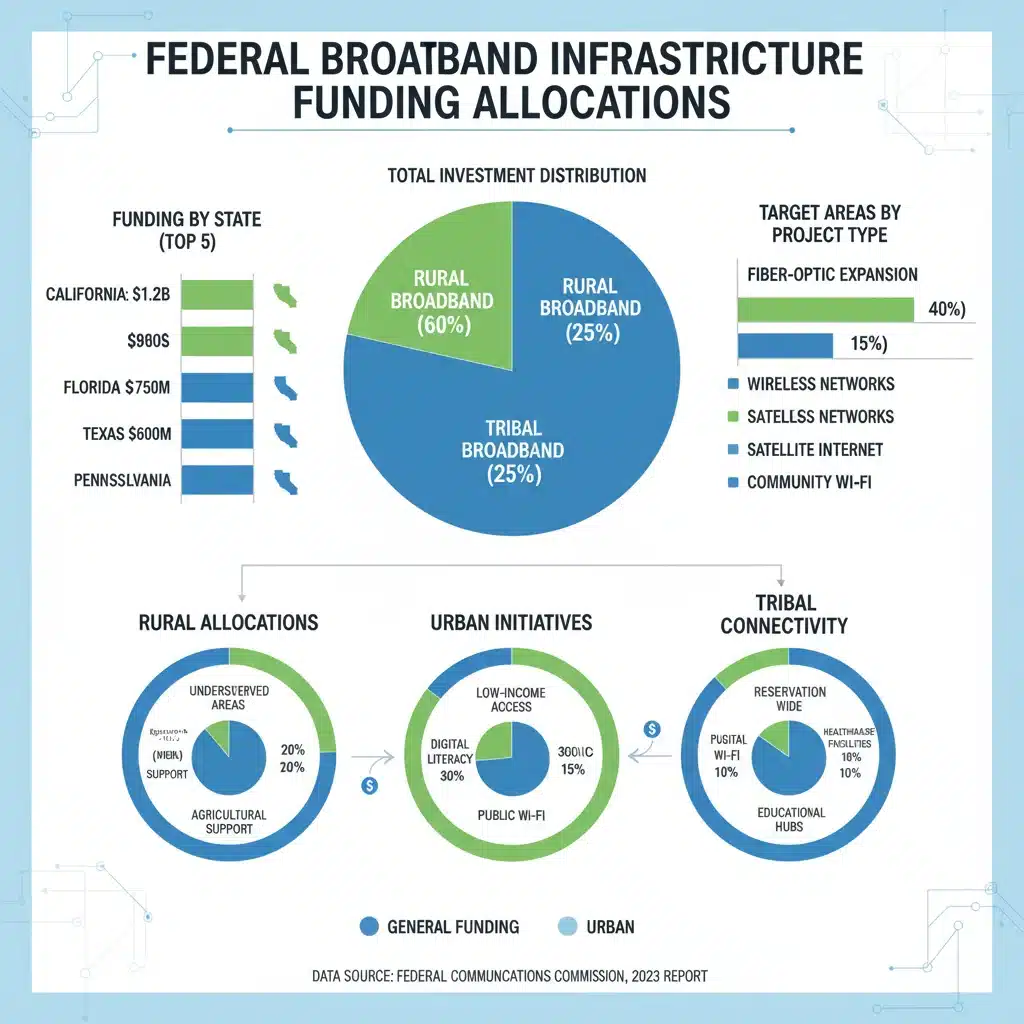
The BEAD program, a cornerstone of the federal strategy, is allocated tens of billions of dollars to expand high-speed internet access by funding infrastructure deployment and adoption programs. The Digital Divide Report 2026 details how states are leveraging BEAD funds to target unserved and underserved areas. This involves grants to internet service providers (ISPs) to build out fiber optic networks, expand fixed wireless access, and explore satellite solutions in the most remote locations. A key focus of BEAD is ensuring that the infrastructure built is future-proof, capable of supporting increasing bandwidth demands for decades to come.
States are required to develop comprehensive five-year action plans, outlining how they intend to use their BEAD allocations to connect every unserved location and a significant percentage of underserved locations. These plans often prioritize partnerships between state governments, local communities, and private ISPs, fostering a collaborative environment aimed at maximizing efficiency and impact. The Digital Divide Report 2026 highlights successful early implementations of BEAD, showcasing how strategic planning and community engagement are crucial for effective deployment.
2. Affordable Connectivity Program (ACP)
While infrastructure is vital, affordability remains a significant hurdle. The Affordable Connectivity Program (ACP) addresses this by providing eligible low-income households with a discount on their monthly internet bill and a one-time discount on a laptop, desktop computer, or tablet. The Digital Divide Report 2026 underscores the critical role of ACP in enabling households to afford internet services once infrastructure is in place. Without programs like ACP, even the most extensive fiber rollout would fail to bridge the affordability aspect of the digital divide.
The ACP has already enrolled millions of households, demonstrating the immense need for such subsidies. The 2026 report emphasizes the ongoing efforts to expand awareness and enrollment in ACP, ensuring that all eligible households are aware of and can access this vital support. Outreach initiatives are particularly focused on communities with high poverty rates and those historically marginalized, ensuring that the benefits of connectivity are truly equitable.
3. Tribal Broadband Connectivity Program (TBCP)
Native American tribal lands disproportionately suffer from a lack of broadband access. The Tribal Broadband Connectivity Program (TBCP) is specifically designed to address these disparities by providing grants to tribal governments for broadband deployment, digital inclusion efforts, and other related projects. The Digital Divide Report 2026 dedicates a significant section to the progress made under TBCP, noting the unique challenges and successes in bringing connectivity to tribal communities. These projects are often community-led, ensuring that solutions are culturally appropriate and meet the specific needs of each tribe.
TBCP funds support a wide range of activities, from building out new fiber networks to establishing community Wi-Fi hotspots and providing digital literacy training. The program recognizes the sovereignty of tribal nations and empowers them to design and implement their own broadband solutions. The Digital Divide Report 2026 emphasizes that the TBCP is not just about internet access; it’s about self-determination and empowering tribal communities to thrive in the digital age.
4. ReConnect Program (USDA)
Administered by the U.S. Department of Agriculture (USDA), the ReConnect Program focuses on bringing broadband infrastructure to rural areas where it is currently lacking. This program offers loans and grants to build, improve, or acquire facilities and equipment needed to provide broadband service in eligible rural areas. The Digital Divide Report 2026 highlights the synergy between ReConnect and other federal programs, showing how they collectively target different facets of the rural digital divide. ReConnect plays a crucial role in ensuring that agricultural communities and small towns are not left behind in the race for connectivity.
The ReConnect program’s emphasis on rural development extends beyond just internet access, recognizing that robust broadband is essential for modern farming practices, rural businesses, and attracting new residents. The 2026 report provides case studies of successful ReConnect projects, demonstrating how these investments are transforming rural economies and improving the quality of life for residents.
Technological Solutions and Deployment Strategies
Achieving the goal of connecting 10 million additional households requires a diverse set of technological solutions and innovative deployment strategies. No single technology can solve the entire problem; rather, a combination of approaches is necessary to address the varied geographical and demographic challenges.
Fiber Optic Networks
Fiber to the Home (FTTH) remains the gold standard for broadband connectivity, offering the highest speeds and most reliable service. A significant portion of federal funding, particularly through BEAD, is dedicated to expanding fiber optic networks to unserved and underserved areas. The Digital Divide Report 2026 emphasizes that investing in fiber provides a future-proof solution, capable of meeting escalating bandwidth demands for decades.
Deployment challenges for fiber include the high cost of construction, especially in rugged terrain or sparsely populated areas. However, innovative trenching techniques, aerial deployment, and public-private partnerships are helping to mitigate these challenges. The report details how states are streamlining permitting processes and coordinating utility pole access to accelerate fiber rollout.
Fixed Wireless Access (FWA)
Fixed Wireless Access (FWA) utilizes cellular technology to deliver broadband internet to homes and businesses without the need for physical cable connections to each premise. FWA is often a more cost-effective and quicker-to-deploy solution in rural areas where fiber deployment is impractical or prohibitively expensive. The Digital Divide Report 2026 acknowledges FWA’s role as a vital complementary technology, especially in bridging the immediate gaps while fiber infrastructure is being built.
Advancements in 5G technology are significantly enhancing the capabilities of FWA, offering faster speeds and lower latency. The report highlights successful FWA deployments in rural communities, demonstrating how this technology can provide reliable broadband where other options are limited.
Satellite Internet
For the most remote and geographically challenging locations, satellite internet continues to play a role. With the advent of low Earth orbit (LEO) satellite constellations, performance has dramatically improved, offering lower latency and higher speeds than traditional geostationary satellites. The Digital Divide Report 2026 discusses how LEO satellite services are being considered as a last-resort option for areas where terrestrial solutions are simply not feasible, ensuring that even the most isolated households can get connected.
While still facing limitations compared to fiber, LEO satellite technology represents a significant leap forward for truly remote connectivity, providing a viable option for communities that were previously considered unreachable by traditional broadband infrastructure.
Digital Inclusion and Literacy Initiatives
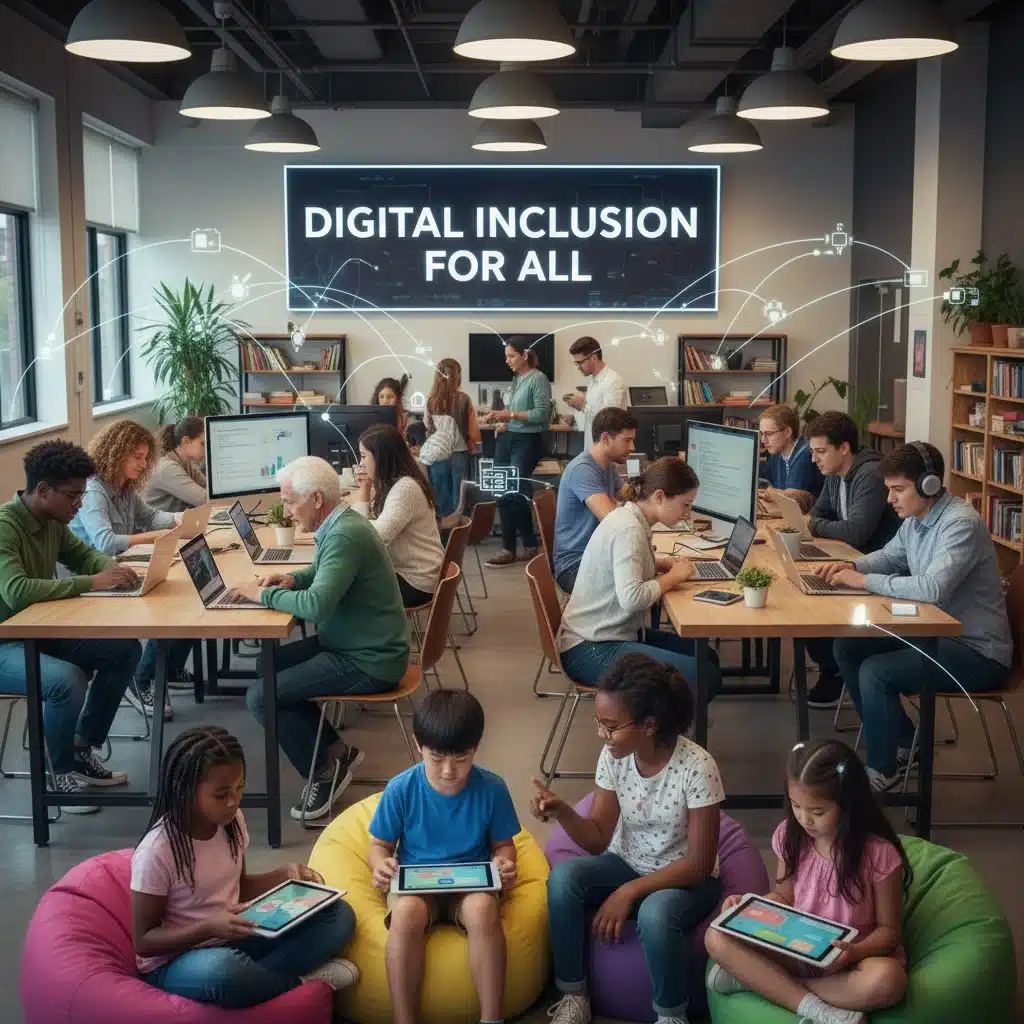
Beyond infrastructure, digital inclusion is paramount. This includes providing access to affordable devices, offering digital literacy training, and creating public access points. The Digital Divide Report 2026 stresses that simply providing internet access is not enough; individuals also need the skills and tools to effectively use it. Federal programs are increasingly integrating digital literacy components, partnering with local libraries, community centers, and non-profits to offer training on basic computer skills, online safety, and how to utilize internet resources for education, work, and health.
These initiatives are crucial for ensuring that newly connected households can fully leverage the benefits of broadband, transforming access into genuine empowerment. The report provides examples of successful digital literacy programs that are making a tangible difference in the lives of individuals and communities.
Measuring Progress and Addressing Challenges
The Digital Divide Report 2026 not only sets ambitious goals but also outlines a robust framework for measuring progress and holding stakeholders accountable. Key performance indicators (KPIs) include the number of newly connected households, the average broadband speeds achieved, and the level of digital adoption within target communities. Regular reporting and data collection are essential to ensure transparency and to identify areas where adjustments to strategy may be needed.
Despite the significant investment and concerted efforts, several challenges persist:
Supply Chain and Workforce Shortages
The massive scale of broadband deployment requires a substantial workforce of skilled technicians and a reliable supply chain for equipment. The Digital Divide Report 2026 identifies potential bottlenecks in both areas, noting that workforce development programs are being ramped up to train the next generation of broadband technicians. Efforts are also underway to diversify supply chains to minimize disruptions and ensure the timely availability of necessary components.
Permitting and Pole Attachment Issues
Deploying new infrastructure often involves navigating complex permitting processes and securing access to utility poles. These bureaucratic hurdles can significantly delay projects. The report details ongoing efforts by federal agencies to work with state and local governments to streamline these processes, promoting ‘dig once’ policies and standardizing pole attachment agreements to accelerate deployment.
Data Accuracy and Mapping
Accurate broadband maps are critical for identifying unserved areas and allocating resources effectively. Historically, broadband mapping has been a challenge, with discrepancies in reported coverage. The Digital Divide Report 2026 highlights improvements in federal mapping efforts, utilizing more granular data and incorporating crowdsourced information to create a more precise picture of broadband availability. This improved data is essential for ensuring that federal funds are directed to where they are most needed.
Sustaining Affordability
While the ACP provides crucial support, long-term sustainability of affordability programs is a concern. The Digital Divide Report 2026 discusses the need for continued political will and funding to ensure that affordability remains a priority beyond the initial push for infrastructure. Exploring innovative funding models and public-private partnerships for sustained subsidies is an ongoing discussion.
The Transformative Impact of Bridging the Digital Divide
Connecting an additional 10 million households will have a profound and transformative impact across various sectors:
Education
For students, reliable home internet means equitable access to online learning resources, homework completion, and opportunities for skill development. The Digital Divide Report 2026 predicts a significant improvement in educational outcomes in newly connected communities, reducing the ‘homework gap’ and empowering students to compete in a globalized world. Teachers will also benefit from enhanced professional development and access to a wider array of digital teaching tools.
Healthcare
Broadband access is crucial for telehealth services, enabling remote consultations, mental health support, and chronic disease management. This is particularly vital for rural communities where access to specialists may be limited. The Digital Divide Report 2026 projects that increased connectivity will lead to improved health outcomes, reduced travel burdens for patients, and more efficient healthcare delivery systems.
Economic Development and Job Creation
New broadband infrastructure stimulates local economies by creating jobs in construction, installation, and maintenance. Once connected, communities become more attractive to businesses, fostering entrepreneurship and enabling remote work opportunities. The 2026 report estimates that bridging the digital divide will contribute significantly to national GDP, creating new economic ecosystems in previously underserved areas.
Civic Engagement and Social Inclusion
Internet access facilitates civic engagement, allowing citizens to access government services, participate in community discussions, and stay informed. It also combats social isolation, connecting individuals with family and friends and opening up new avenues for social interaction and cultural exchange. The Digital Divide Report 2026 highlights the importance of connectivity in building stronger, more resilient communities.
Conclusion: A Connected Future in Sight
The Digital Divide Report 2026 paints an optimistic yet realistic picture of the nation’s progress in achieving universal broadband access. The commitment to connect 10 million more households this year through robust federal programs like BEAD, ACP, TBCP, and ReConnect represents a historic investment in the nation’s future. While challenges remain, the coordinated effort, diverse technological approaches, and emphasis on digital inclusion are laying the groundwork for a truly connected society.
Bridging the digital divide is not merely about wires and signals; it’s about unlocking human potential, fostering economic growth, and ensuring that every American has the opportunity to thrive in the 21st century. The progress detailed in the Digital Divide Report 2026 demonstrates that a future where no one is left behind in the digital age is not just a dream, but an achievable reality, one connection at a time.
As these programs continue to roll out, monitoring their effectiveness, adapting to new challenges, and maintaining a steadfast commitment will be paramount. The journey to universal connectivity is complex, but with the momentum generated by the 2026 initiatives, the nation is on a clear path towards digital equity for all.