2026 Social Security COLA: What a 3.5% Increase Means for Your Finances

How to Prepare for the 2026 Social Security Cost-of-Living Adjustment: What an Estimated 3.5% Increase Means for You (RECENT UPDATES)
As millions of Americans rely on Social Security benefits for their financial well-being, understanding upcoming adjustments is paramount. The Cost-of-Living Adjustment (COLA) is an annual increase designed to help Social Security and Supplemental Security Income (SSI) benefits keep pace with inflation. For 2026, experts are currently estimating a significant 3.5% increase in the Social Security COLA. While this is an estimate and the final number won’t be announced until late 2025, it provides a crucial benchmark for beneficiaries to begin planning. This projected 3.5% increase for the 2026 Social Security COLA could have a substantial impact on your monthly income, your budget, and your overall retirement strategy. In this comprehensive guide, we’ll delve into what this estimated increase truly means for you, how it’s calculated, and what steps you can take now to prepare for the changes ahead.
Understanding the Social Security COLA
The Social Security COLA is a vital mechanism that protects the purchasing power of Social Security benefits. Without it, the fixed income of retirees, survivors, and disabled individuals would steadily erode due to inflation. Historically, the COLA has been a cornerstone of financial stability for beneficiaries, ensuring that their benefits maintain relevance in an ever-changing economic landscape. The purpose of the COLA is straightforward: to prevent inflation from diminishing the real value of Social Security payments. This annual adjustment is not a bonus or an extra payment; rather, it is a necessary recalibration to reflect the rising cost of goods and services.
How the COLA is Calculated
The Social Security Administration (SSA) determines the annual COLA based on the Consumer Price Index for Urban Wage Earners and Clerical Workers (CPI-W). Specifically, they compare the average CPI-W for the third quarter (July, August, and September) of the current year with the average CPI-W for the third quarter of the most recent year in which a COLA was payable. The percentage increase between these two periods, rounded to the nearest one-tenth of one percent, becomes the COLA for the following year. If there is no increase, or if the CPI-W decreases, there is no COLA. This methodology ensures that the adjustment directly reflects the inflation experienced by a significant portion of the population, thereby providing a fair and accurate increase to benefits. Understanding this calculation is key to grasping why the 2026 Social Security COLA is projected at 3.5% and how future economic conditions might influence subsequent adjustments.
Historical Context of COLA Adjustments
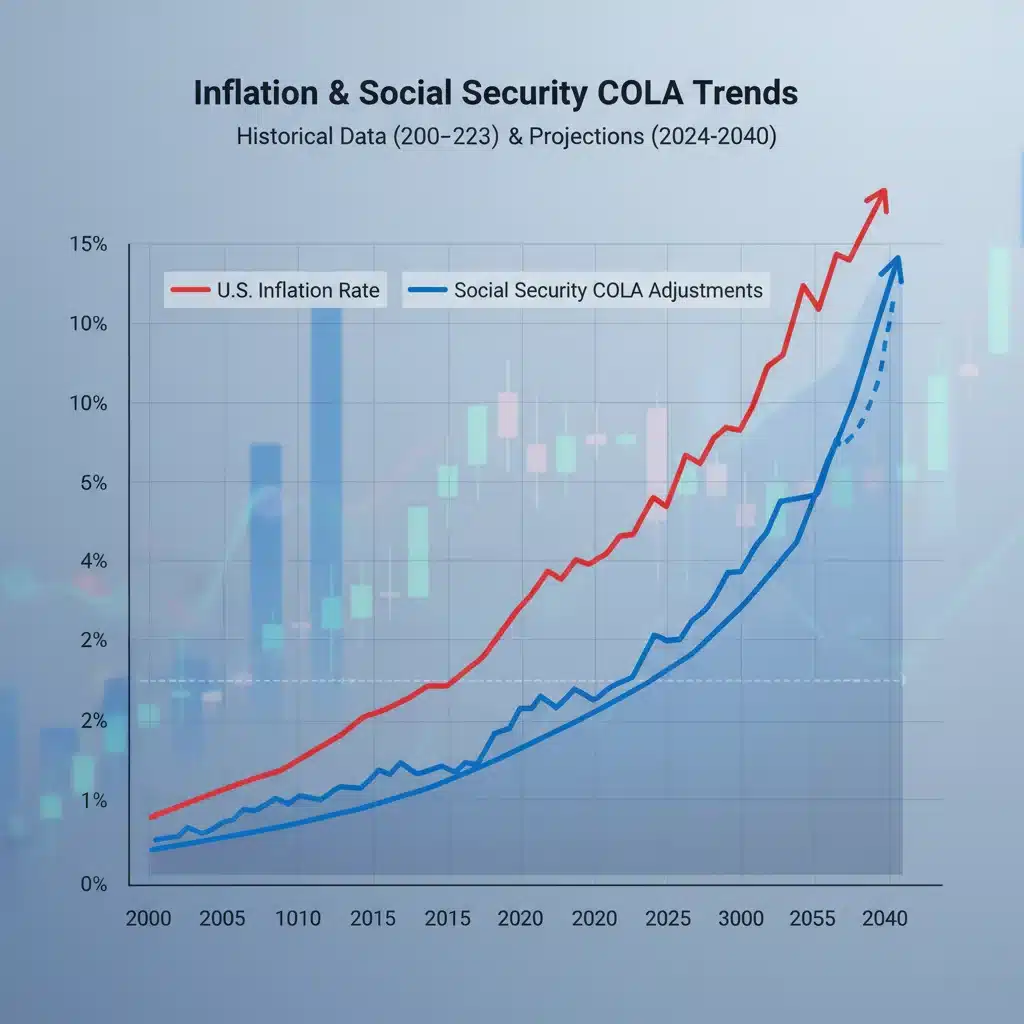
Looking back at previous COLA adjustments provides valuable insight into the volatility and significance of these annual changes. For instance, recent years have seen considerable fluctuations: a 5.9% increase for 2022, a substantial 8.7% for 2023, and a more modest 3.2% for 2024. These variations underscore the direct link between inflation rates and COLA. When inflation is high, as it was in 2021 and 2022, the COLA tends to be higher. Conversely, in periods of lower inflation, the COLA is smaller. The estimated 3.5% for the 2026 Social Security COLA suggests a continued, albeit moderated, inflationary environment. These historical trends highlight the importance of staying informed about economic indicators that influence the COLA, as they directly affect the financial health of millions of beneficiaries. Analyzing past adjustments helps beneficiaries anticipate future changes and plan their finances more effectively.
The Estimated 3.5% Increase for 2026 Social Security COLA
The projection of a 3.5% increase for the 2026 Social Security COLA is based on current economic forecasts, particularly inflation trends. While it’s still an estimate, it’s a strong indicator of what beneficiaries can expect. This percentage is derived from analyzing the current trajectory of the CPI-W and anticipating its movement through the third quarter of 2025. Various economic models and expert analyses contribute to these projections, providing a consensus view on the likely adjustment. It’s crucial for beneficiaries to monitor these projections, as they offer an early glimpse into potential changes to their income. A 3.5% increase, while not as dramatic as some recent years, is still a significant boost that can help mitigate the ongoing effects of rising living costs.
Impact on Your Monthly Benefits
A 3.5% increase in your Social Security benefits can translate to a noticeable difference in your monthly income. For example, if your current monthly benefit is $1,500, a 3.5% increase would add $52.50 to your payment, bringing it to $1,552.50. While this might seem like a modest amount individually, cumulatively over a year, it adds up to a significant sum that can help cover essential expenses. For those receiving higher benefits, the monetary increase will be even more substantial. This additional income can be allocated towards groceries, utilities, housing, or discretionary spending, thereby enhancing your overall financial stability. Understanding the exact dollar amount of your 2026 Social Security COLA increase is the first step in effectively incorporating it into your budget.
Potential Effects on Medicare Premiums
One critical aspect to consider with any COLA increase is its interaction with Medicare Part B premiums. By law, Medicare Part B premiums are typically deducted directly from Social Security benefits. There’s a ‘hold harmless’ provision that prevents most beneficiaries from seeing a reduction in their net Social Security benefit due to an increase in Medicare Part B premiums. However, for those who are not covered by the ‘hold harmless’ provision (e.g., new beneficiaries, those whose premiums are paid by Medicaid, or those who pay income-related monthly adjustment amounts), or if the Part B premium increase is substantial, it can offset a significant portion of the COLA. The exact Medicare Part B premium for 2026 will be announced later, but it’s important to factor in potential increases when evaluating the net impact of the 2026 Social Security COLA on your financial health. This interplay between COLA and Medicare premiums is a complex but vital consideration for many beneficiaries.
Preparing for the 2026 Social Security COLA
Proactive planning is essential to maximize the benefits of the 2026 Social Security COLA. While the official announcement is still some time away, understanding the estimated increase allows you to begin strategizing. This preparation involves reviewing your current financial situation, considering potential changes in expenses, and making informed decisions about your budget and investments. The goal is to ensure that the COLA increase genuinely improves your financial standing and helps you meet your long-term goals. By taking these preparatory steps now, you can avoid surprises and optimize the impact of the upcoming adjustment.
Reviewing Your Current Budget and Expenses
The first step in preparing for the 2026 Social Security COLA is to conduct a thorough review of your current budget and expenses. Analyze your monthly income and outflow to identify areas where you might be overspending or where you can reallocate funds. Consider how inflation has already impacted your daily costs – groceries, utilities, transportation, and healthcare. Understanding your current financial landscape will help you determine how the 3.5% increase will affect your purchasing power. This review should be an ongoing process, but it becomes particularly important when anticipating a COLA. By having a clear picture of your finances, you can better assess where the additional benefit can make the most significant difference.
Adjusting Your Financial Planning
Once you have a clear understanding of your budget, you can begin adjusting your financial planning. Consider how the increased Social Security benefit might impact your overall retirement income strategy. For some, it might mean a little extra cushion for unexpected expenses. For others, it could allow for increased savings, investments, or even discretionary spending on leisure activities. If you have existing financial goals, such as paying down debt, saving for a large purchase, or increasing your emergency fund, the COLA increase can provide a valuable boost. Consult with a financial advisor to discuss how this adjustment fits into your broader financial plan, especially if you have complex investments or multiple income streams. They can help you strategize the most effective use of your increased Social Security COLA.
Considering the Impact on Taxes
It’s important to remember that Social Security benefits can be taxable, depending on your ‘provisional income.’ Provisional income includes your adjusted gross income, tax-exempt interest, and half of your Social Security benefits. If your provisional income exceeds certain thresholds, a portion of your Social Security benefits (up to 85%) may be subject to federal income tax. A 3.5% COLA increase means a higher gross benefit, which could potentially push your provisional income above a tax threshold or into a higher tax bracket. While this is generally a good problem to have, it’s something to be aware of. Plan accordingly by estimating your provisional income for 2026 and consulting with a tax professional if you have concerns. Understanding the tax implications of your increased 2026 Social Security COLA is crucial for accurate financial planning.
Broader Economic Context and Future Outlook
The 2026 Social Security COLA doesn’t exist in a vacuum; it’s a reflection of the broader economic environment. Understanding the factors that influence inflation and, consequently, the COLA, can provide a clearer picture of what to expect in the coming years. Economic indicators such as energy prices, food costs, housing markets, and global supply chain stability all play a role in shaping the CPI-W. Keeping an eye on these trends can help beneficiaries anticipate future adjustments and plan accordingly. The future outlook for Social Security also involves discussions about its long-term solvency, which may or may not directly impact annual COLA calculations but is an important consideration for all beneficiaries.
Inflation Trends and Projections
Current inflation trends are a primary driver behind the estimated 3.5% 2026 Social Security COLA. While inflation has moderated from its peak in 2022, it remains a persistent factor in the economy. Central banks’ monetary policies, geopolitical events, and consumer demand all contribute to inflationary pressures. Economists continuously monitor these factors to project future inflation rates, which in turn inform COLA estimates. A sustained period of moderate inflation could lead to consistent, albeit perhaps not exceptionally high, COLA increases. Conversely, a resurgence of high inflation would likely result in larger COLA adjustments, while a deflationary environment could lead to no COLA at all. Staying informed about these macroeconomic trends is essential for anyone receiving Social Security benefits, as they directly influence the purchasing power of your income.
The Role of the CPI-W and its Limitations
While the CPI-W is the official index used to calculate the Social Security COLA, it’s not without its critics and limitations. Some argue that the CPI-W, which measures the spending habits of urban wage earners and clerical workers, doesn’t accurately reflect the spending patterns of seniors. Older adults often spend a larger portion of their income on healthcare and housing, categories that may increase at a different rate than the overall CPI-W. There have been proposals to use an alternative index, such as the Consumer Price Index for the Elderly (CPI-E), which theoretically would better reflect senior spending. However, as of now, the CPI-W remains the standard. Understanding these nuances helps beneficiaries contextualize the COLA and recognize that while it’s designed to protect purchasing power, it may not perfectly align with every individual’s personal inflation experience. The 2026 Social Security COLA will be determined using this established metric.

Strategies for Maximizing Your Benefits
Beyond simply receiving the 2026 Social Security COLA, there are several strategies beneficiaries can employ to maximize their overall financial well-being. These strategies range from optimizing other income sources to making wise spending decisions. A holistic approach to retirement planning, incorporating the COLA into a broader financial picture, is the most effective way to ensure long-term security. Every dollar counts in retirement, and thoughtful planning can make a significant difference.
Delaying Social Security (If Applicable)
For those who have not yet claimed Social Security benefits, delaying your claim beyond your full retirement age can significantly increase your monthly payment. For every year you delay claiming past your full retirement age, up to age 70, your benefit increases by approximately 8% per year. These delayed retirement credits are then compounded by subsequent COLA increases. For example, if you delay claiming and receive a higher base benefit, a 3.5% 2026 Social Security COLA will result in a larger dollar increase compared to someone who claimed earlier with a lower base benefit. This strategy is not suitable for everyone, as it depends on individual health, financial needs, and other income sources, but it’s a powerful tool for maximizing lifetime benefits.
Managing Healthcare Costs
Healthcare costs are often one of the largest and most unpredictable expenses for retirees. While the COLA helps offset inflation, rising healthcare costs can quickly erode any gains. It’s crucial to actively manage these expenses. This includes reviewing your Medicare plan annually during the open enrollment period to ensure you have the most cost-effective coverage, exploring Medicare Advantage plans or Medigap policies, and taking advantage of preventive care. Additionally, researching prescription drug assistance programs and generic alternatives can significantly reduce out-of-pocket costs. By proactively managing healthcare expenses, you can ensure that the 2026 Social Security COLA has a greater positive impact on your disposable income.
Seeking Financial Advice
Navigating the complexities of Social Security, COLA adjustments, and overall retirement planning can be challenging. Consulting with a qualified financial advisor can provide invaluable guidance. An advisor can help you understand how the 2026 Social Security COLA fits into your comprehensive financial plan, optimize your investment strategies, and ensure you are taking advantage of all available benefits and tax efficiencies. They can also assist with estate planning, long-term care planning, and other critical aspects of financial security in retirement. A professional perspective can provide clarity and confidence, especially during periods of economic change and benefit adjustments.
Recent Updates and What to Watch For
The estimated 3.5% for the 2026 Social Security COLA is a projection, and the final figure will depend on economic data released throughout 2025. It’s crucial for beneficiaries to stay informed about the latest economic indicators and official announcements from the Social Security Administration. Key data points to watch include monthly CPI-W reports, which will provide a running estimate of inflation. The SSA typically announces the official COLA in October of the preceding year, so the 2026 COLA will be finalized in October 2025. Monitoring these updates will help you fine-tune your financial planning and ensure you are fully prepared for the upcoming adjustment.
Official Announcement Timeline
The official announcement of the 2026 Social Security COLA will be made by the Social Security Administration in October 2025. This announcement will be based on the average CPI-W data for July, August, and September of 2025. Until then, any figures discussed are estimates, albeit often well-researched ones. Once the official announcement is made, beneficiaries will receive written notification of their new benefit amount, typically in December, with the adjusted payments commencing in January 2026. Knowing this timeline allows you to anticipate when to expect definitive information and when the changes will take effect.
Where to Find Reliable Information
To ensure you are getting accurate and up-to-date information regarding the 2026 Social Security COLA, rely on official sources. The Social Security Administration’s official website (SSA.gov) is the primary resource for all COLA-related announcements and detailed explanations. Additionally, reputable financial news outlets and government agencies that track economic data can provide valuable insights. Be wary of unofficial sources or sensationalized headlines that may misrepresent the facts. Staying informed through credible channels is the best way to make sound financial decisions. Regularly checking these sources will ensure you are among the first to know about any definitive updates regarding the 2026 Social Security COLA.
Conclusion
The estimated 3.5% increase for the 2026 Social Security COLA represents a significant adjustment that can impact the financial landscape of millions of beneficiaries. While it is an estimate, it provides a valuable opportunity for proactive planning. By understanding how the COLA is calculated, reviewing your budget, considering the interplay with Medicare, and exploring broader financial strategies, you can effectively prepare for this upcoming change. Staying informed through official channels and seeking professional advice when needed will ensure that you maximize the benefits of this adjustment and maintain your financial security in retirement. The 2026 Social Security COLA is more than just a number; it’s a vital component of your financial future, and being prepared is key to navigating it successfully.